Chat with a human
Let us help you pick the perfect camper for your once in a lifetime adventure

Self-contained campervans offer greater flexibility and access to more sites across New Zealand. Non-certified vans are limited to holiday parks and require more planning.
If you're planning a campervan trip around New Zealand, one of the biggest decisions is whether to hire a self-contained or non-self-contained van. On paper, the difference can sound pretty technical. In reality, it changes how your entire road trip works.
A self-contained campervan in New Zealand carries onboard water, a fixed toilet, and sealed waste storage. It can support its occupants for three days without external services. That setup is what gives you legal access to freedom camping at hundreds of public sites across the country. Without it, you are limited to holiday parks and powered campgrounds, which cost more and require bookings.
The rules tightened in 2023 and will finish phasing in on 7 June 2026. Under the new rules, every vehicle camping on council land in New Zealand needs a current green warrant card. Councils and DOC will no longer accept blue warrants under the older NZS 5465:2001 standard.
If you are planning a trip this winter or next summer, this matters. Here is what self-containment actually means, what's changed recently, and why it makes such a difference once you're out on the road.
Quick SummaryA self-contained campervan is a vehicle certified to carry its own freshwater and manage its own wastewater. A fixed toilet must contain human waste for at least three days without dump stations or public toilets. In New Zealand, this certification is what gives you legal access to freedom camping spots. These are managed by local councils and the Department of Conservation. Technical requirements come from NZS 5465:2001 and the Plumbers, Gasfitters and Drainlayers (Self-Contained Vehicles) Regulations 2023. The current document is the green warrant card, issued for four years and now compulsory for all rental campervans. Private blue warrants are valid until expiry or 7 June 2026, whichever comes first. At Big Little Campers, every van in our fleet is certified as self-contained and has a current green warrant. That keeps your options open across the whole country. |
What is a self-contained campervan?A self-contained campervan is a vehicle that meets the NZS 5465:2001 self-containment standard. The phrase "self-contained campervan New Zealand" usually refers to a van that carries everything needed to handle drinking water. It must have provisions to hold washing water, wastewater, human waste, and rubbish for three days without using any external facility. For most travellers, having a self-contained vehicle means one thing: independence. The van does not need to plug into power, hook up to mains water, or sit next to a public toilet block. It carries its own systems. Local councils and DOC require these before they let you park overnight. The rule covers protected coastal, lake, and bush settings. A certified self-contained van ensures you will not leave waste behind. |
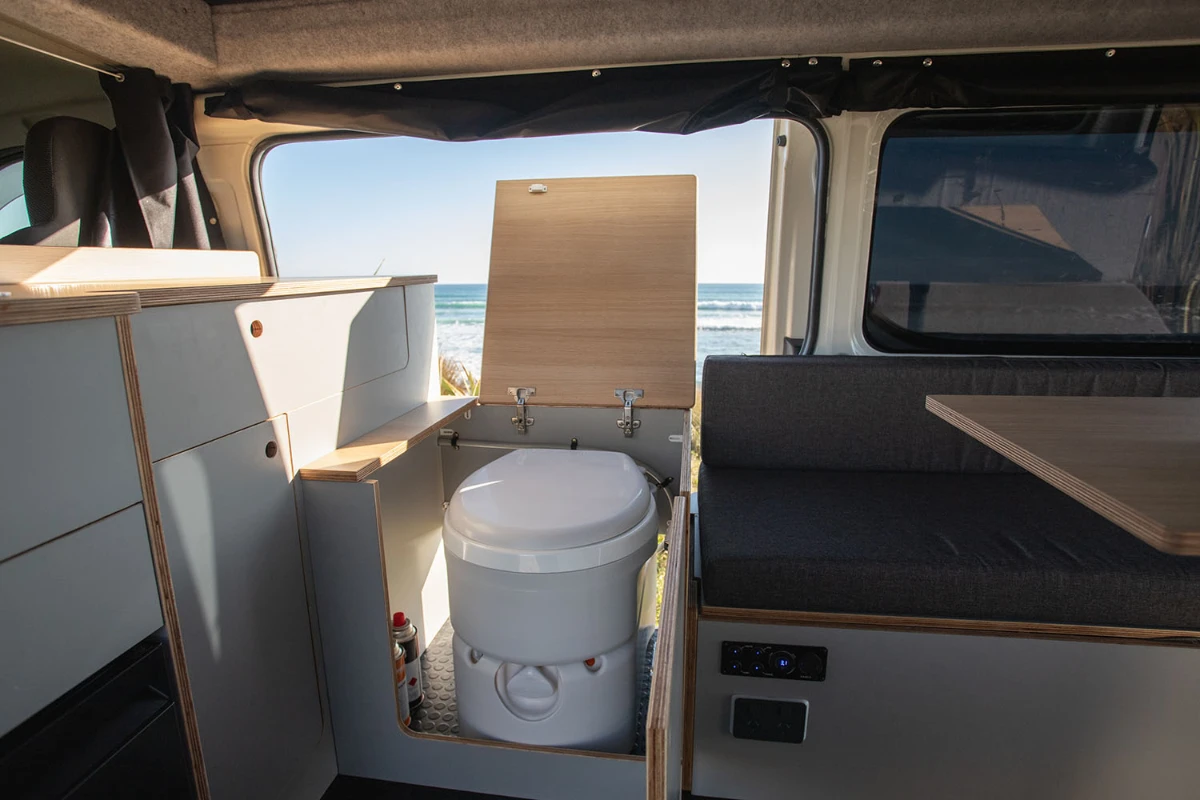
What does a campervan need to be certified as self-contained?A campervan needs five things to pass a green warrant inspection in New Zealand: a fixed toilet, a freshwater tank, a sealed greywater tank, a sealable rubbish bin, and an evacuation hose. Each has a minimum capacity scaled to the number of berths. Current technical requirements set out by the Ministry of Business, Innovation and Employment, include:
The fixed-toilet rule is the change that catches most travellers out. Under the older blue warrant standard, a properly secured portable toilet could pass. Under the green warrant, it cannot. That is the single biggest reason older budget vans are dropping out of the freedom camping category. |
|
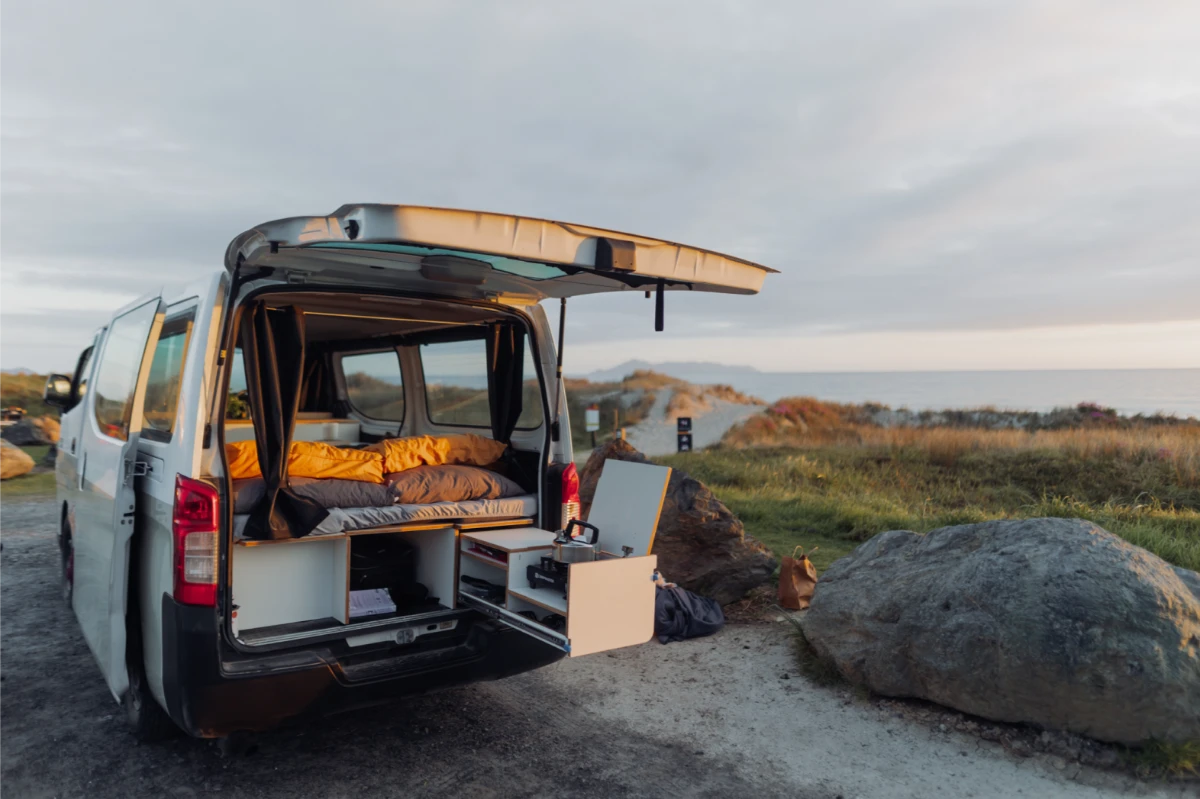
What is the difference between self-contained and non-self-contained?The biggest difference is where you're legally allowed to stay overnight. A self-contained campervan can legally freedom camp at most council-managed and DOC sites. A non-self-contained campervan cannot. It is limited to holiday parks, powered sites, and a few paid campgrounds. These campgrounds permit non-certified vehicles.
Non-self-contained vans are sometimes smaller and slightly cheaper upfront, which can suit shorter trips or travellers sticking mostly to holiday parks. But once you start adding nightly campground fees, the savings disappear pretty quickly. With a certified van, you can camp for free at most council-run freedom camping sites and most conservation land managed by DOC. Without certification, those options are out of reach. |
|
What changes on 7 June 2026?From 7 June 2026, blue warrant cards issued under NZS 5465:2001 will no longer be valid for freedom camping in New Zealand. From that date, every certified self-contained vehicle needs a current green warrant card to freedom camp on council land. The rule sits under the Self-contained Motor Vehicles Legislation Act 2023. Key dates in the phase-in set by MBIE:
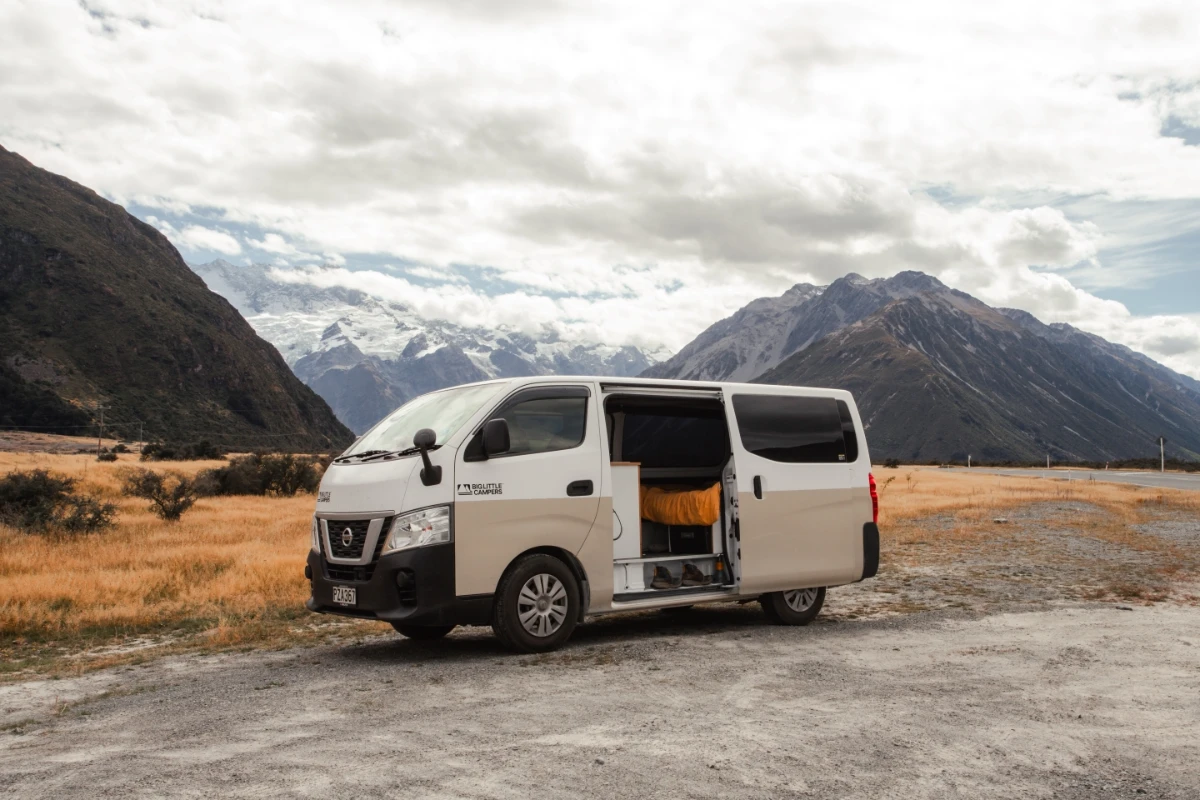
Every BLC van already meets the updated Green Warrant standard, so travellers hiring through us are fully covered. If you're hiring elsewhere, it's worth asking the operator directly whether the van has a current Green Warrant. |
Frequently Asked QuestionsWhat is a self-contained vehicle in NZ?In New Zealand, a self-contained vehicle is a campervan, motorhome, or caravan with onboard water, a fixed toilet, wastewater storage, and rubbish storage. It can support its occupants for at least three days without external services. The current certification is the green warrant card under the Self-contained Motor Vehicles Legislation Act 2023. What is a self-contained camper, in plain terms?A self-contained camper can park up overnight on its own. No power hookup, no public toilet, no dump station required. Everything is on board. That's what makes freedom camping legal across most of New Zealand's public land. What is a certified self-contained campervan?A certified self-contained campervan holds a current warrant card from an approved Certification Authority. The card is either green, under the 2023 regulations, or blue, under the older standard. Blue cards remain valid until 7 June 2026. Certification is what makes legal freedom camping access possible. Is a fully self-contained campervan worth it for a NZ trip?For most travellers, absolutely. The real value isn't just avoiding campground fees. It's the flexibility that comes with being able to stay in places that don't require bookings or crowded holiday parks. You can pull up beside a lake in the Mackenzie Basin, stay at a DOC site on the West Coast, or spend the night somewhere quiet near the beach without needing to lock your trip into a strict itinerary weeks ahead. Most travellers also end up freedom camping and mixing in the occasional powered site for showers, laundry, and battery charging. That balance usually works really well over longer trips. The slightly larger van size is generally a worthwhile trade-off once you're travelling for more than a week or two. Can I freedom camp in a self-contained van NZ-wide?Not quite anywhere. Even with a green warrant, you can only freedom camp in zones the local council or DOC has designated for that purpose. Some areas restrict overnight stays altogether. Use the Rankers app or CamperMate to check each spot before you settle in. What is the difference between a blue sticker and a green warrant?The blue sticker (and its accompanying card) was issued under NZS 5465:2001. The green warrant is the new card under the 2023 regulations. From 7 June 2026, only green warrants are valid for freedom camping on council land. What if a rental company cannot show a green warrant?Look for alternatives if you're looking forward to the complete freedom camping experience. The regulations have required rental campervans to hold a green warrant since 7 December 2024. |
BLC: Ready for a Road Trip that is Truly IndependentThe 2026 Green Warrant deadline has made the difference between self-contained and non-self-contained campervans much clearer than it used to be. Either your van meets the updated standard and gives you proper freedom camping access, or you'll be relying mostly on holiday parks and paid campgrounds throughout your trip. Every self-contained campervan in the BLC fleet, including The Little One, The Big One, and The Biggest One, holds a current green warrant. If you are planning a New Zealand road trip without the holiday-park constraints, you are already in the right place. Check our fleet to find the campervan that suits your trip, or get in touch, and we will help you pick the right one. |
|
References
Department of Conservation. (n.d.). Freedom camping. https://www.doc.govt.nz/parks-and-recreation/places-to-stay/stay-at-a-campsite/freedom-camping/
Ministry of Business, Innovation and Employment. (n.d.). Chapter 1: Self-containment technical requirements. https://www.mbie.govt.nz/immigration-and-tourism/tourism/tourism-projects/supporting-responsible-freedom-camping-in-aotearoa-new-zealand/freedom-camping-regulations-discussion-document/chapter-1-self-containment-technical-requirements
New Zealand Government. (2023). Self-contained Motor Vehicles Legislation Act 2023. https://www.legislation.govt.nz/act/public/2023/24/en/latest/#LMS737445
New Zealand Government. (2023). Plumbers, Gasfitters and Drainlayers (Self-Contained Vehicles) Regulations 2023. https://www.legislation.govt.nz/secondary-legislation/pco-drafted/2023/217/en/latest/#LMS881723
Standards New Zealand. (2001). NZS 5465:2001 Self containment of motor caravans and caravans. https://www.standards.govt.nz/shop/nzs-54652001
If you're planning a campervan trip around New Zealand, one of the biggest decisions is whether to hire a self-contained or non-self-contained van. On paper, the difference can sound pretty technical. In reality, it changes how your entire road trip works.
A self-contained campervan in New Zealand carries onboard water, a fixed toilet, and sealed waste storage. It can support its occupants for three days without external services. That setup is what gives you legal access to freedom camping at hundreds of public sites across the country. Without it, you are limited to holiday parks and powered campgrounds, which cost more and require bookings.
The rules tightened in 2023 and will finish phasing in on 7 June 2026. Under the new rules, every vehicle camping on council land in New Zealand needs a current green warrant card. Councils and DOC will no longer accept blue warrants under the older NZS 5465:2001 standard.
If you are planning a trip this winter or next summer, this matters. Here is what self-containment actually means, what's changed recently, and why it makes such a difference once you're out on the road.
Quick SummaryA self-contained campervan is a vehicle certified to carry its own freshwater and manage its own wastewater. A fixed toilet must contain human waste for at least three days without dump stations or public toilets. In New Zealand, this certification is what gives you legal access to freedom camping spots. These are managed by local councils and the Department of Conservation. Technical requirements come from NZS 5465:2001 and the Plumbers, Gasfitters and Drainlayers (Self-Contained Vehicles) Regulations 2023. The current document is the green warrant card, issued for four years and now compulsory for all rental campervans. Private blue warrants are valid until expiry or 7 June 2026, whichever comes first. At Big Little Campers, every van in our fleet is certified as self-contained and has a current green warrant. That keeps your options open across the whole country. |
What is a self-contained campervan?A self-contained campervan is a vehicle that meets the NZS 5465:2001 self-containment standard. The phrase "self-contained campervan New Zealand" usually refers to a van that carries everything needed to handle drinking water. It must have provisions to hold washing water, wastewater, human waste, and rubbish for three days without using any external facility. For most travellers, having a self-contained vehicle means one thing: independence. The van does not need to plug into power, hook up to mains water, or sit next to a public toilet block. It carries its own systems. Local councils and DOC require these before they let you park overnight. The rule covers protected coastal, lake, and bush settings. A certified self-contained van ensures you will not leave waste behind. |
What does a campervan need to be certified as self-contained?A campervan needs five things to pass a green warrant inspection in New Zealand: a fixed toilet, a freshwater tank, a sealed greywater tank, a sealable rubbish bin, and an evacuation hose. Each has a minimum capacity scaled to the number of berths. Current technical requirements set out by the Ministry of Business, Innovation and Employment, include:
The fixed-toilet rule is the change that catches most travellers out. Under the older blue warrant standard, a properly secured portable toilet could pass. Under the green warrant, it cannot. That is the single biggest reason older budget vans are dropping out of the freedom camping category. |
|
What is the difference between self-contained and non-self-contained?The biggest difference is where you're legally allowed to stay overnight. A self-contained campervan can legally freedom camp at most council-managed and DOC sites. A non-self-contained campervan cannot. It is limited to holiday parks, powered sites, and a few paid campgrounds. These campgrounds permit non-certified vehicles.
Non-self-contained vans are sometimes smaller and slightly cheaper upfront, which can suit shorter trips or travellers sticking mostly to holiday parks. But once you start adding nightly campground fees, the savings disappear pretty quickly. With a certified van, you can camp for free at most council-run freedom camping sites and most conservation land managed by DOC. Without certification, those options are out of reach. |
|
|
What changes on 7 June 2026?From 7 June 2026, blue warrant cards issued under NZS 5465:2001 will no longer be valid for freedom camping in New Zealand. From that date, every certified self-contained vehicle needs a current green warrant card to freedom camp on council land. The rule sits under the Self-contained Motor Vehicles Legislation Act 2023. Key dates in the phase-in set by MBIE:
Every BLC van already meets the updated Green Warrant standard, so travellers hiring through us are fully covered. If you're hiring elsewhere, it's worth asking the operator directly whether the van has a current Green Warrant. |
Frequently Asked QuestionsWhat is a self-contained vehicle in NZ?In New Zealand, a self-contained vehicle is a campervan, motorhome, or caravan with onboard water, a fixed toilet, wastewater storage, and rubbish storage. It can support its occupants for at least three days without external services. The current certification is the green warrant card under the Self-contained Motor Vehicles Legislation Act 2023. What is a self-contained camper, in plain terms?A self-contained camper can park up overnight on its own. No power hookup, no public toilet, no dump station required. Everything is on board. That's what makes freedom camping legal across most of New Zealand's public land. What is a certified self-contained campervan?A certified self-contained campervan holds a current warrant card from an approved Certification Authority. The card is either green, under the 2023 regulations, or blue, under the older standard. Blue cards remain valid until 7 June 2026. Certification is what makes legal freedom camping access possible. Is a fully self-contained campervan worth it for a NZ trip?For most travellers, absolutely. The real value isn't just avoiding campground fees. It's the flexibility that comes with being able to stay in places that don't require bookings or crowded holiday parks. You can pull up beside a lake in the Mackenzie Basin, stay at a DOC site on the West Coast, or spend the night somewhere quiet near the beach without needing to lock your trip into a strict itinerary weeks ahead. Most travellers also end up freedom camping and mixing in the occasional powered site for showers, laundry, and battery charging. That balance usually works really well over longer trips. The slightly larger van size is generally a worthwhile trade-off once you're travelling for more than a week or two. Can I freedom camp in a self-contained van NZ-wide?Not quite anywhere. Even with a green warrant, you can only freedom camp in zones the local council or DOC has designated for that purpose. Some areas restrict overnight stays altogether. Use the Rankers app or CamperMate to check each spot before you settle in. What is the difference between a blue sticker and a green warrant?The blue sticker (and its accompanying card) was issued under NZS 5465:2001. The green warrant is the new card under the 2023 regulations. From 7 June 2026, only green warrants are valid for freedom camping on council land. What if a rental company cannot show a green warrant?Look for alternatives if you're looking forward to the complete freedom camping experience. The regulations have required rental campervans to hold a green warrant since 7 December 2024. |
BLC: Ready for a Road Trip that is Truly IndependentThe 2026 Green Warrant deadline has made the difference between self-contained and non-self-contained campervans much clearer than it used to be. Either your van meets the updated standard and gives you proper freedom camping access, or you'll be relying mostly on holiday parks and paid campgrounds throughout your trip. Every self-contained campervan in the BLC fleet, including The Little One, The Big One, and The Biggest One, holds a current green warrant. If you are planning a New Zealand road trip without the holiday-park constraints, you are already in the right place. Check our fleet to find the campervan that suits your trip, or get in touch, and we will help you pick the right one. |
|
References
Department of Conservation. (n.d.). Freedom camping. https://www.doc.govt.nz/parks-and-recreation/places-to-stay/stay-at-a-campsite/freedom-camping/
Ministry of Business, Innovation and Employment. (n.d.). Chapter 1: Self-containment technical requirements. https://www.mbie.govt.nz/immigration-and-tourism/tourism/tourism-projects/supporting-responsible-freedom-camping-in-aotearoa-new-zealand/freedom-camping-regulations-discussion-document/chapter-1-self-containment-technical-requirements
New Zealand Government. (2023). Self-contained Motor Vehicles Legislation Act 2023. https://www.legislation.govt.nz/act/public/2023/24/en/latest/#LMS737445
New Zealand Government. (2023). Plumbers, Gasfitters and Drainlayers (Self-Contained Vehicles) Regulations 2023. https://www.legislation.govt.nz/secondary-legislation/pco-drafted/2023/217/en/latest/#LMS881723
Standards New Zealand. (2001). NZS 5465:2001 Self containment of motor caravans and caravans. https://www.standards.govt.nz/shop/nzs-54652001
Read more











.jpg)
.jpg)
.jpg)
.jpg)
.jpg)

.jpg)
.jpg)



.jpg)