Chat with a human
Let us help you pick the perfect camper for your once in a lifetime adventure
.jpg)
|
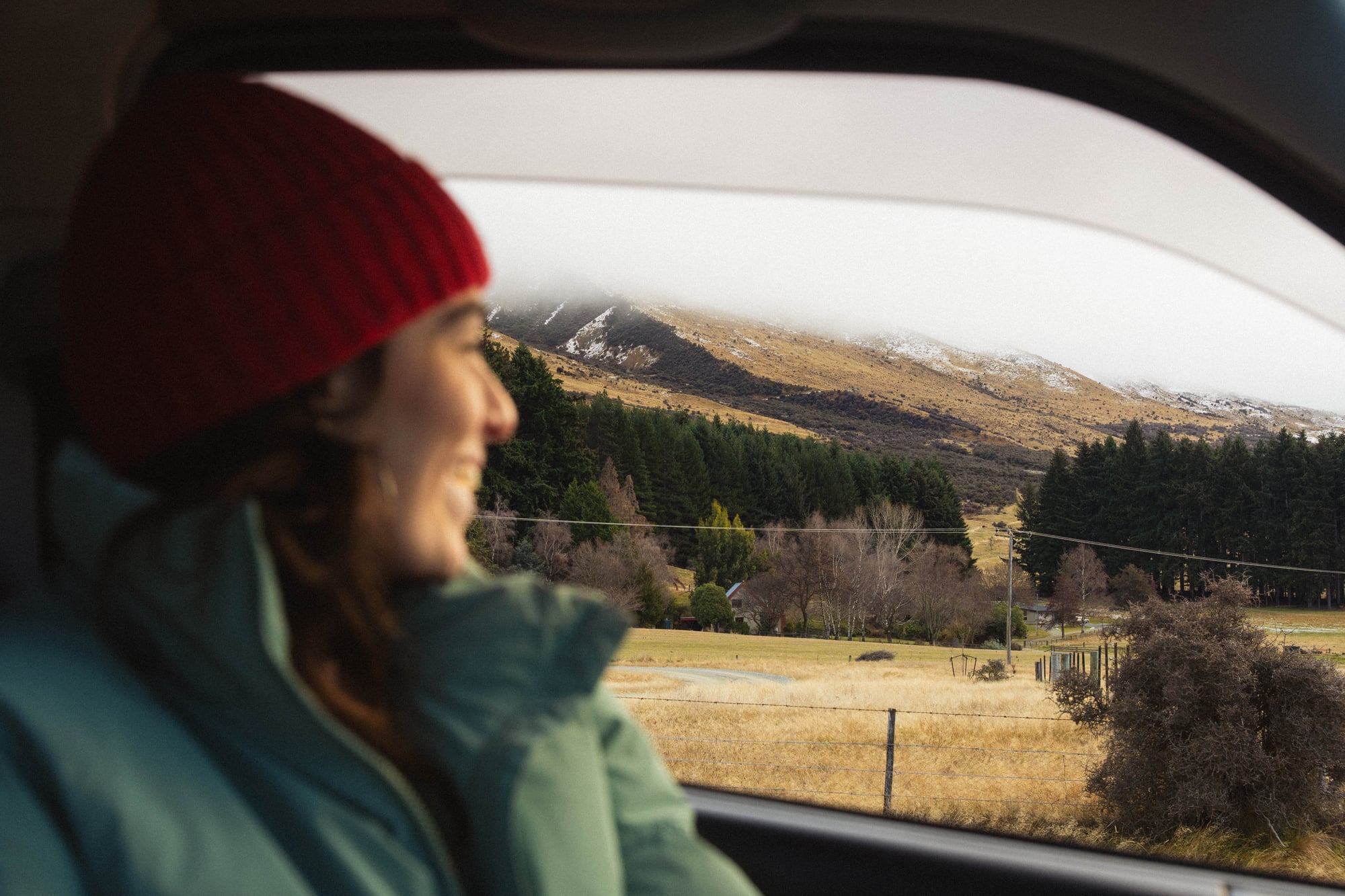
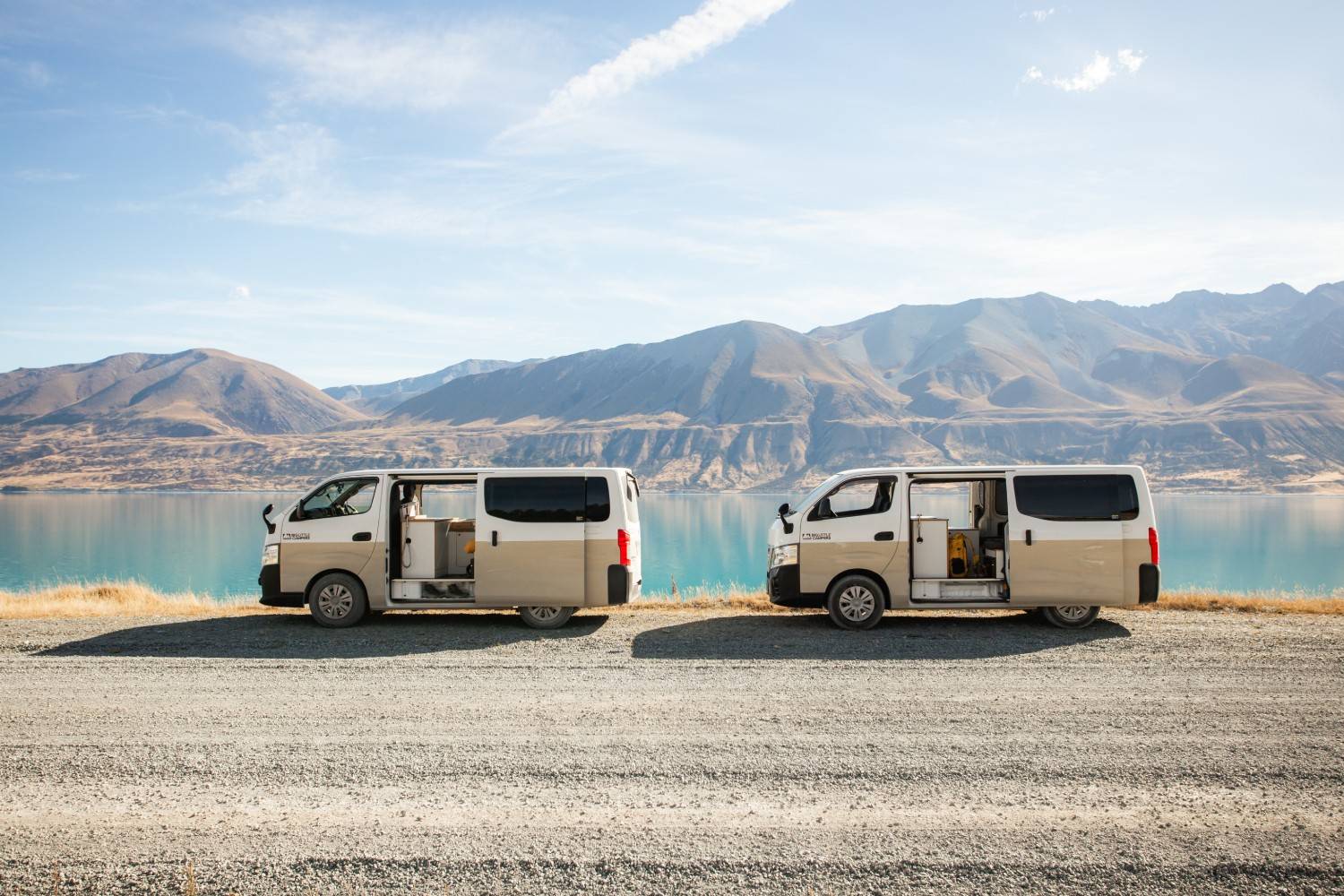
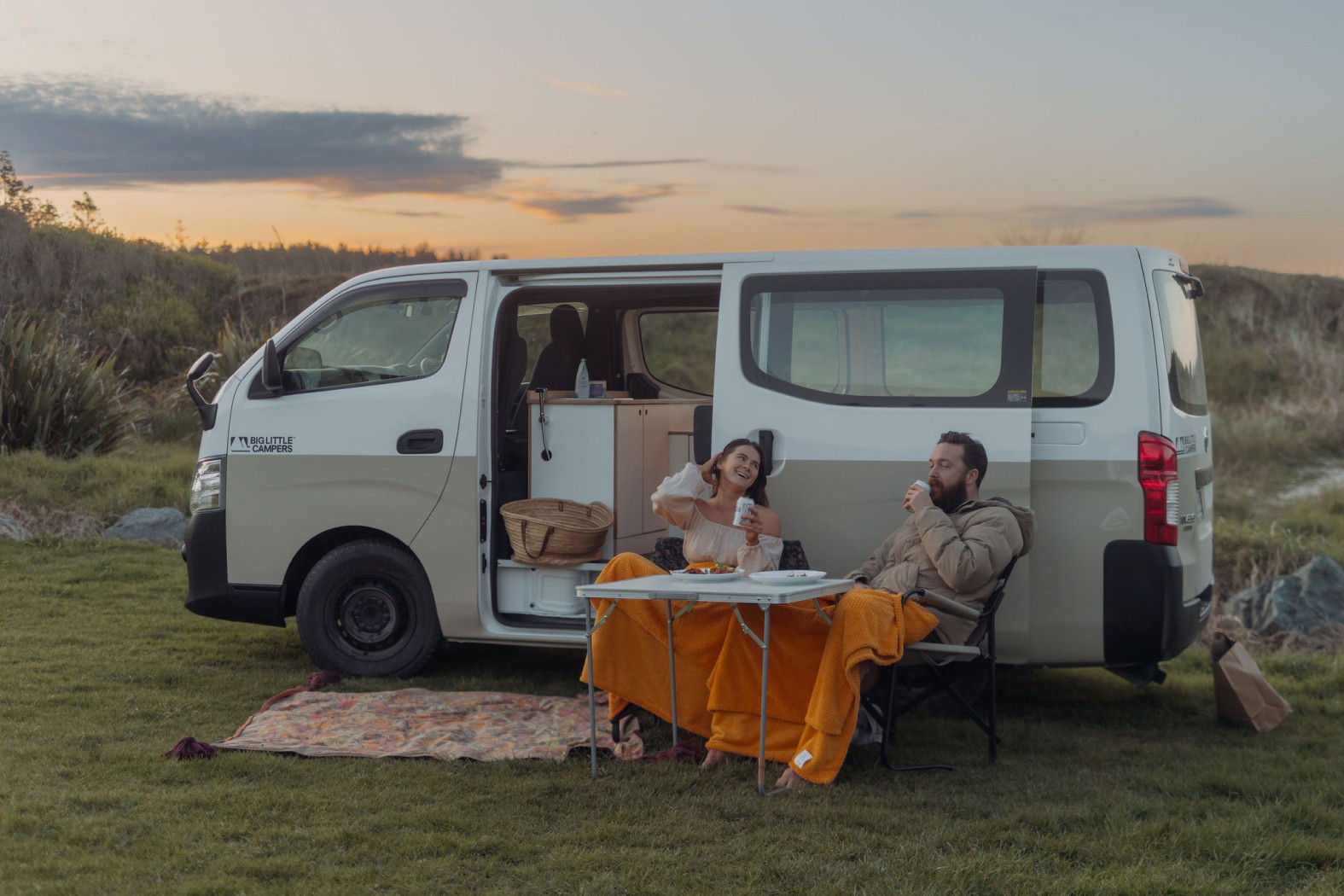
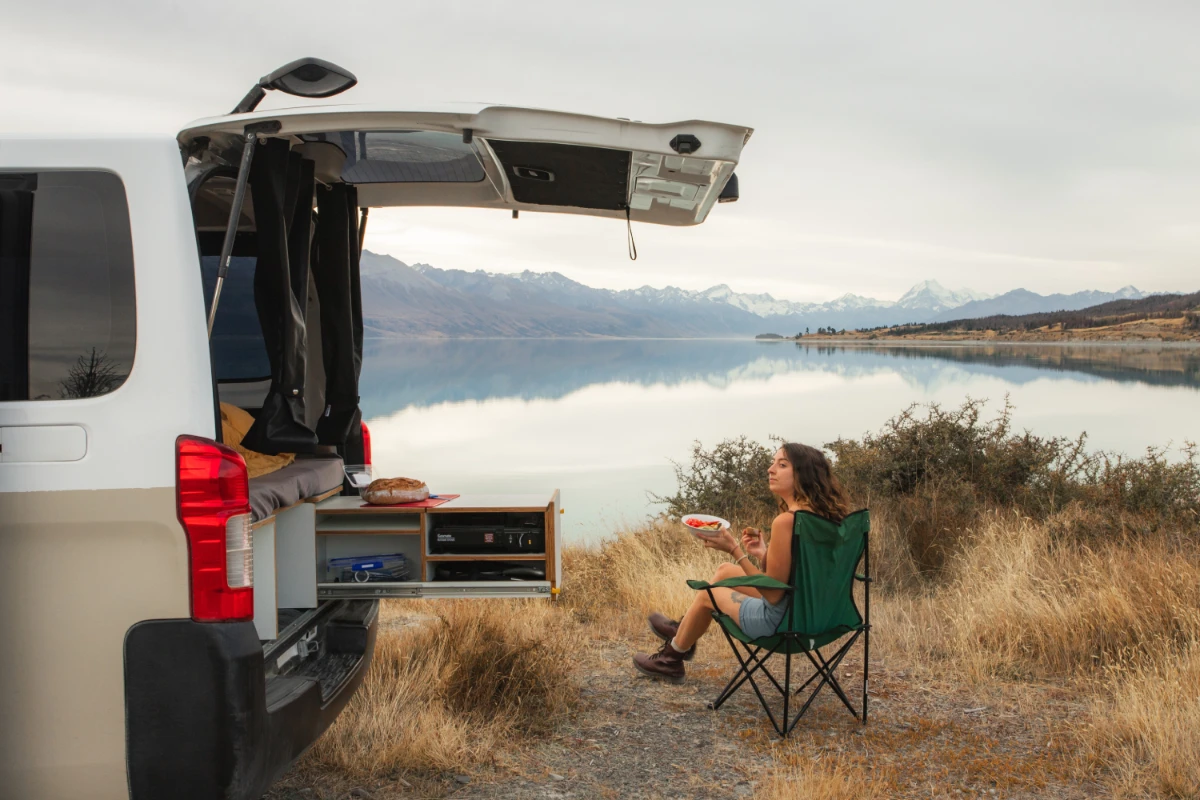
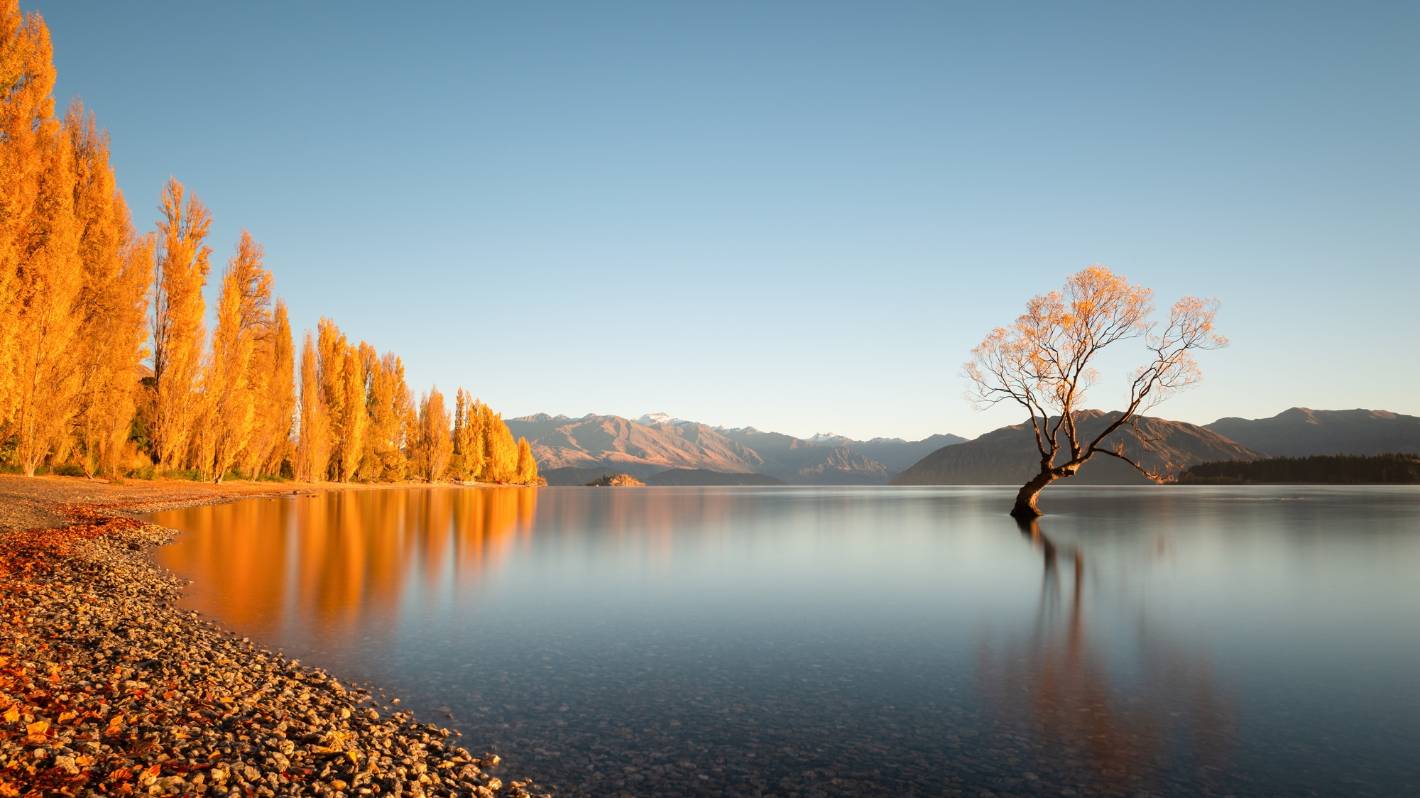
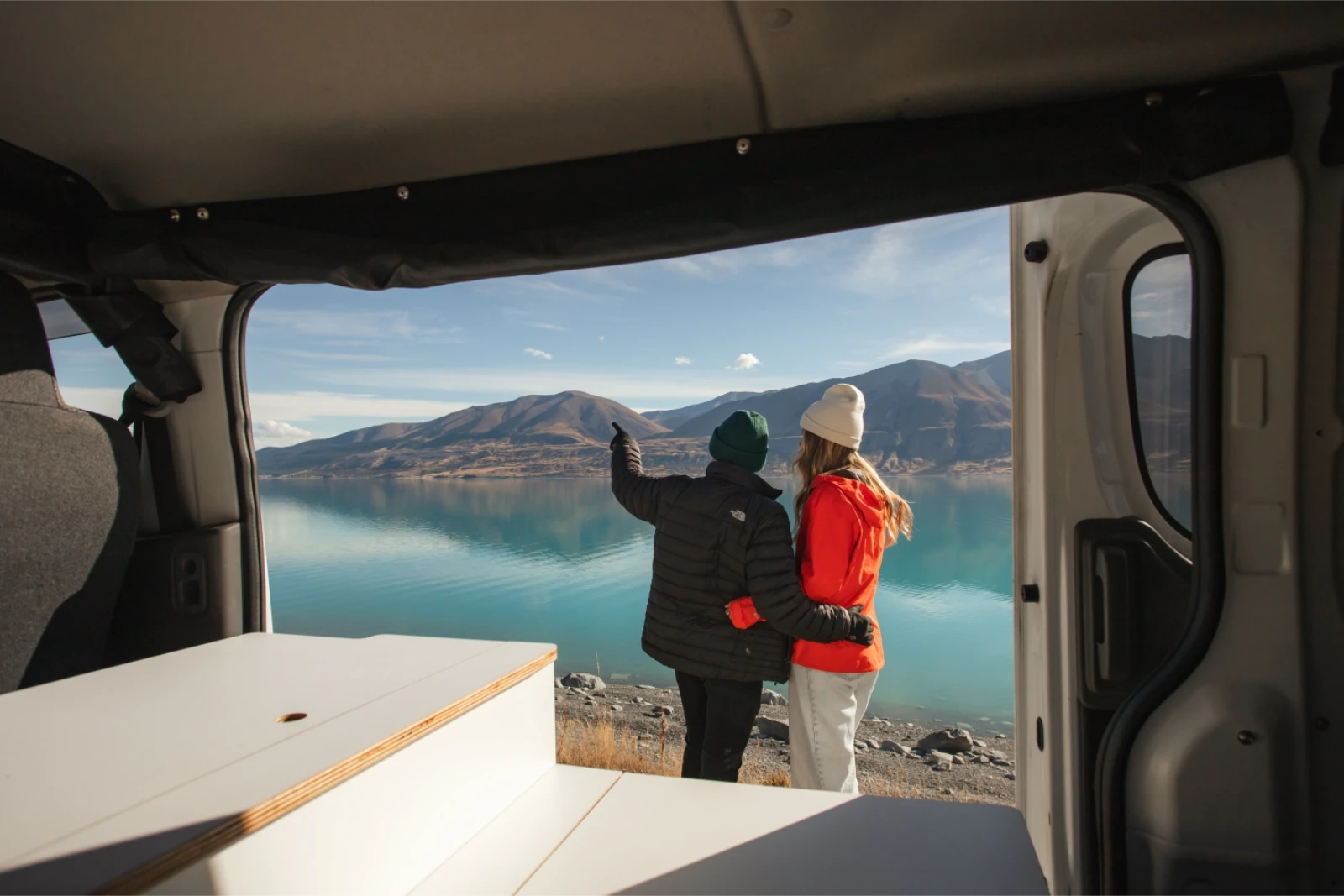
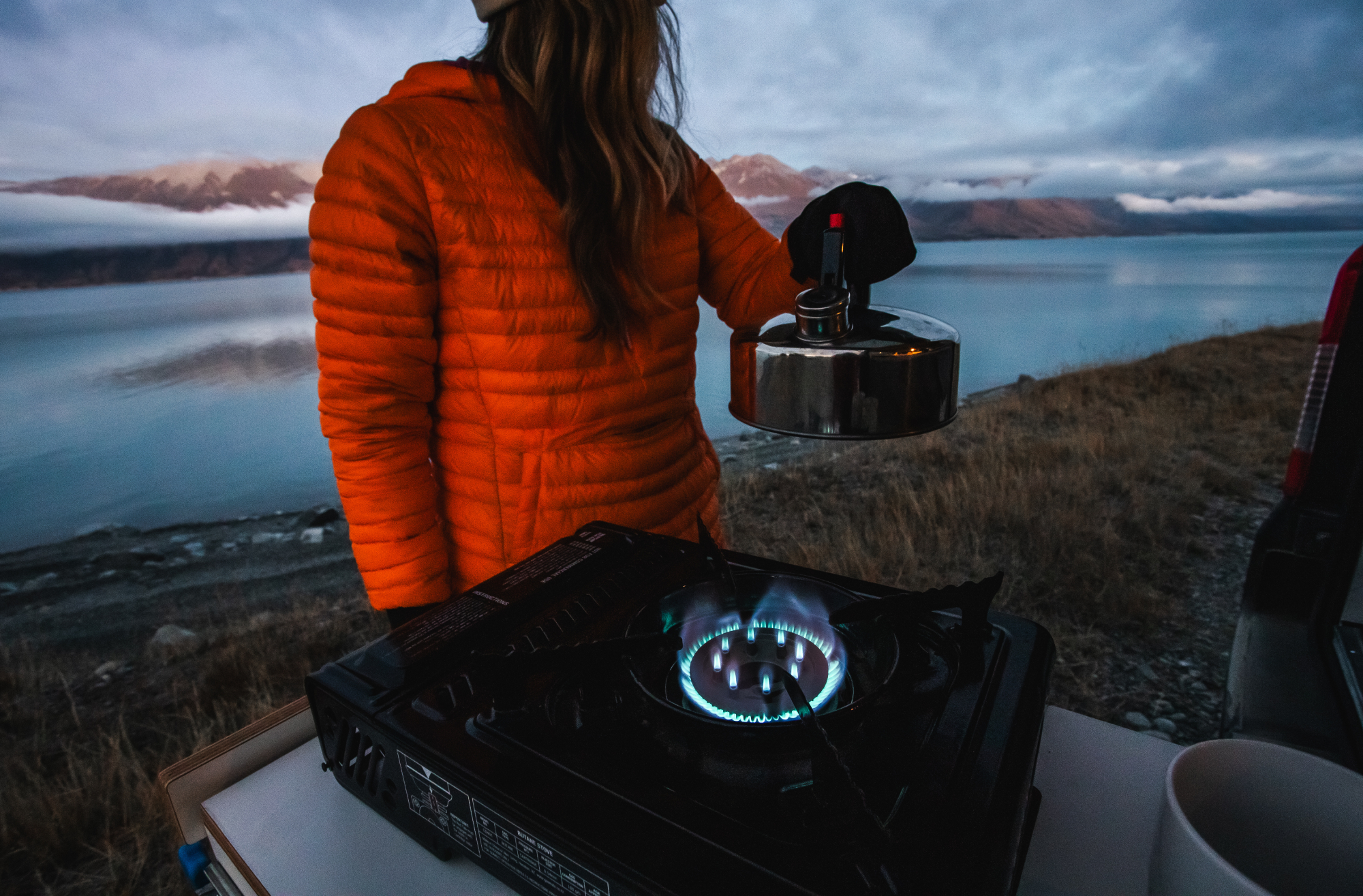
Winter's one of the best times to road-trip in New Zealand if you're set up properly. The roads are quieter, freedom camping spots are emptier, and places like Tekapo, Wānaka, and Queenstown look even better with snow on the mountains. The trade-off is that winter asks a bit more of both your van and your planning. Heating matters. Road conditions matter. And some campsites and alpine routes need a bit more thought than they do in summer. Get those parts right, and you trade summer queues for empty lookouts, snow-dusted lakes, and ski-field access. |
Quick SummaryCampervanning in winter in New Zealand is doable, especially from June to August when ski fields are running, and the South Island lights up with snow. North Island days sit between 5 and 15°C. Inland South Island spots like Queenstown, Wānaka, and Tekapo see temperatures dropping to around 3°C in the day and -3°C at night. You'll want a self-contained van with proper insulation, ideally a diesel heater for the colder routes. Alpine passes like the Crown Range, Lindis Pass, and Arthur's Pass also required snow chains. Big Little Campers winter rates start from $80 NZD per day in June, July, and August. Trade-offs include shorter daylight and the occasional road closure. You also need to plan campsites, as some DOC sites reduce their hours in the off-season. |
|
|
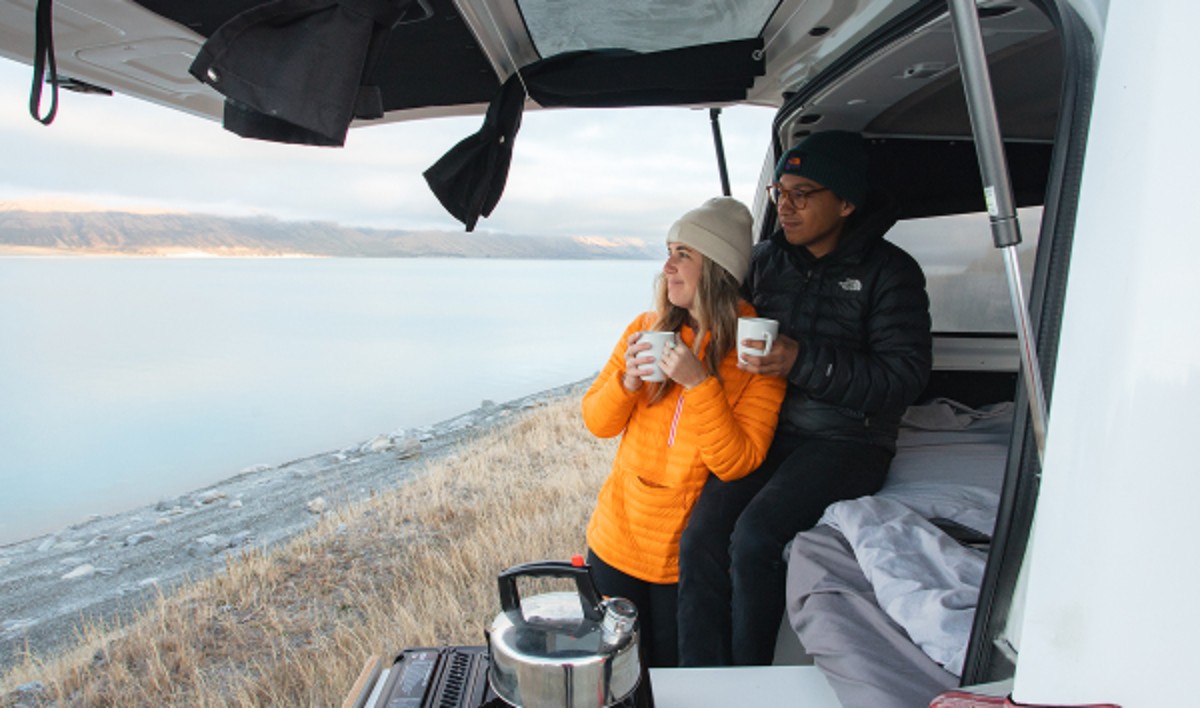
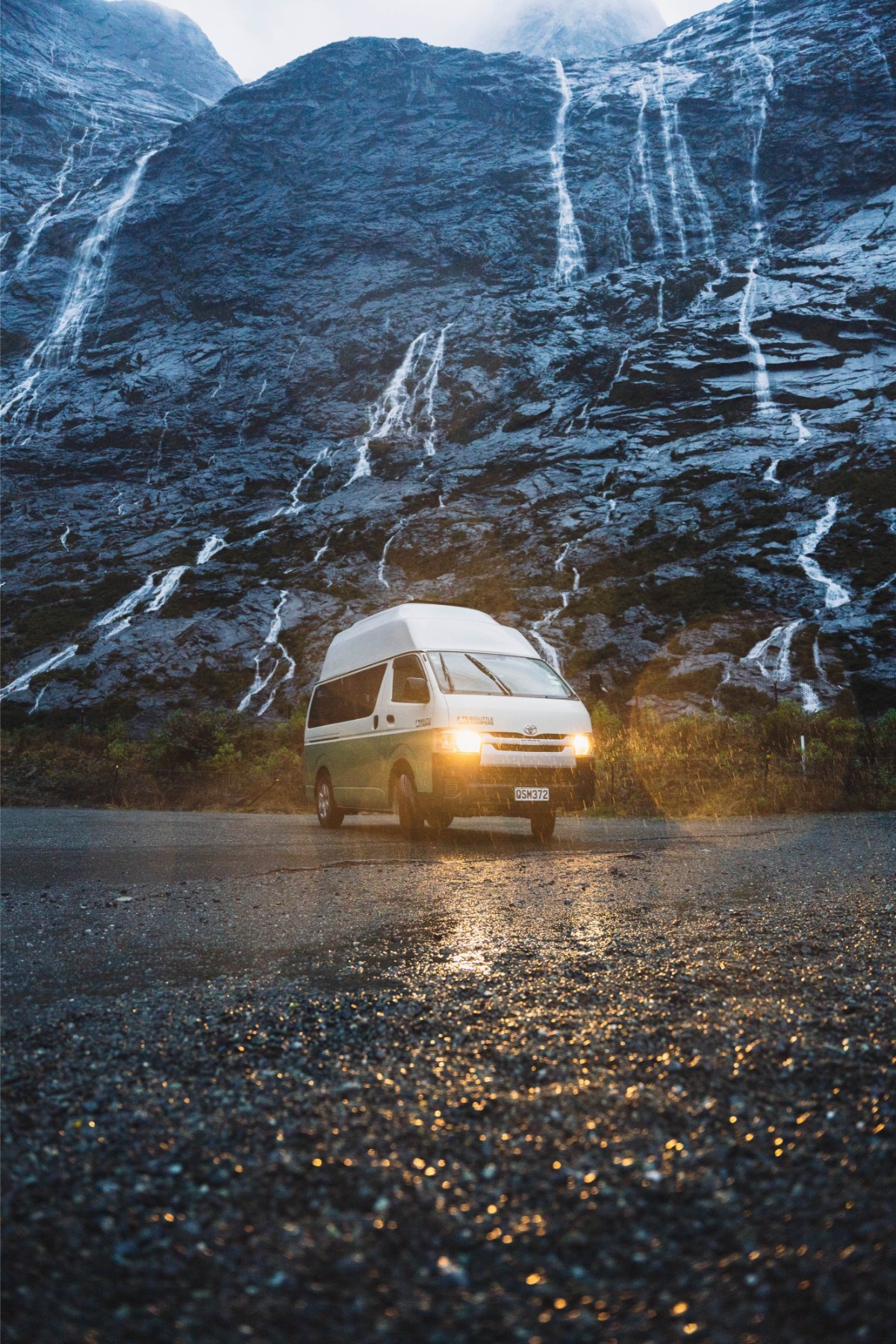
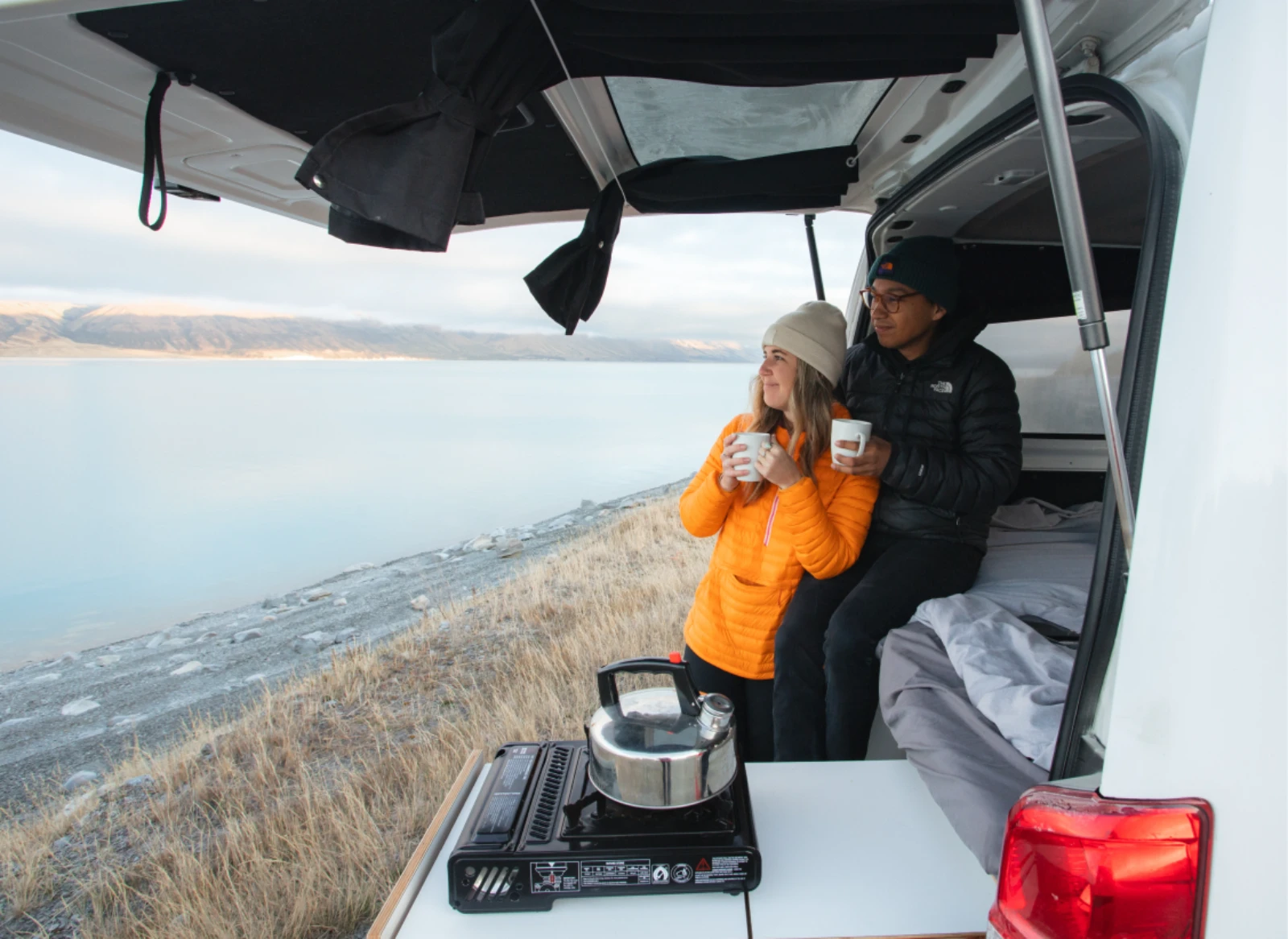
Can You Campervan in Winter in NZ?Yes, and honestly, winter is one of the best times to do it if you like quieter travel. Summer gets the attention, but winter gives you empty lookouts, snow-covered mountains, easier freedom camping access, and far fewer people everywhere you go. Ski fields are running, hot pools feel even better in cold weather, and places like Milford Sound can feel almost surreal on a clear winter morning. The weather changes a lot depending on where you are. Auckland and the Bay of Islands stay mild at 12 to 15°C. Christchurch sits around 10°C with overnight frosts. Queenstown highs are 6 to 8°C with nights down to -3°C in July. Tekapo and the Mackenzie are the coldest, often falling at -5°C, per Air New Zealand's seasonal guide. A self-contained, well-insulated campervan handles all of it. A tired old van with single-glazed windows is a very different experience. How Cold Does It Get, and Is It Manageable?Cold enough that setup matters, but very manageable with the right gear. The coldest areas are inland South Island regions like Tekapo, the Mackenzie Basin, Wānaka, and Queenstown. Overnight temperatures regularly sit below zero in July and August. Coastal North Island trips are much milder and easier overall. The biggest comfort upgrade is a diesel heater inside the van (more on that next). After that, the rest of the kit is unglamorous but essential. Good insulation. A four-season sleeping bag rated to -5°C, with a wool blanket on top. Hot water bottles. An electric blanket for nights at powered sites. Pack proper warm clothes for inside the van too. Thick socks, a beanie, and a fleece after sunset make more of a difference than any single piece of kit. An extra layer over the sleeping bag turns a cold night into a comfortable one. |
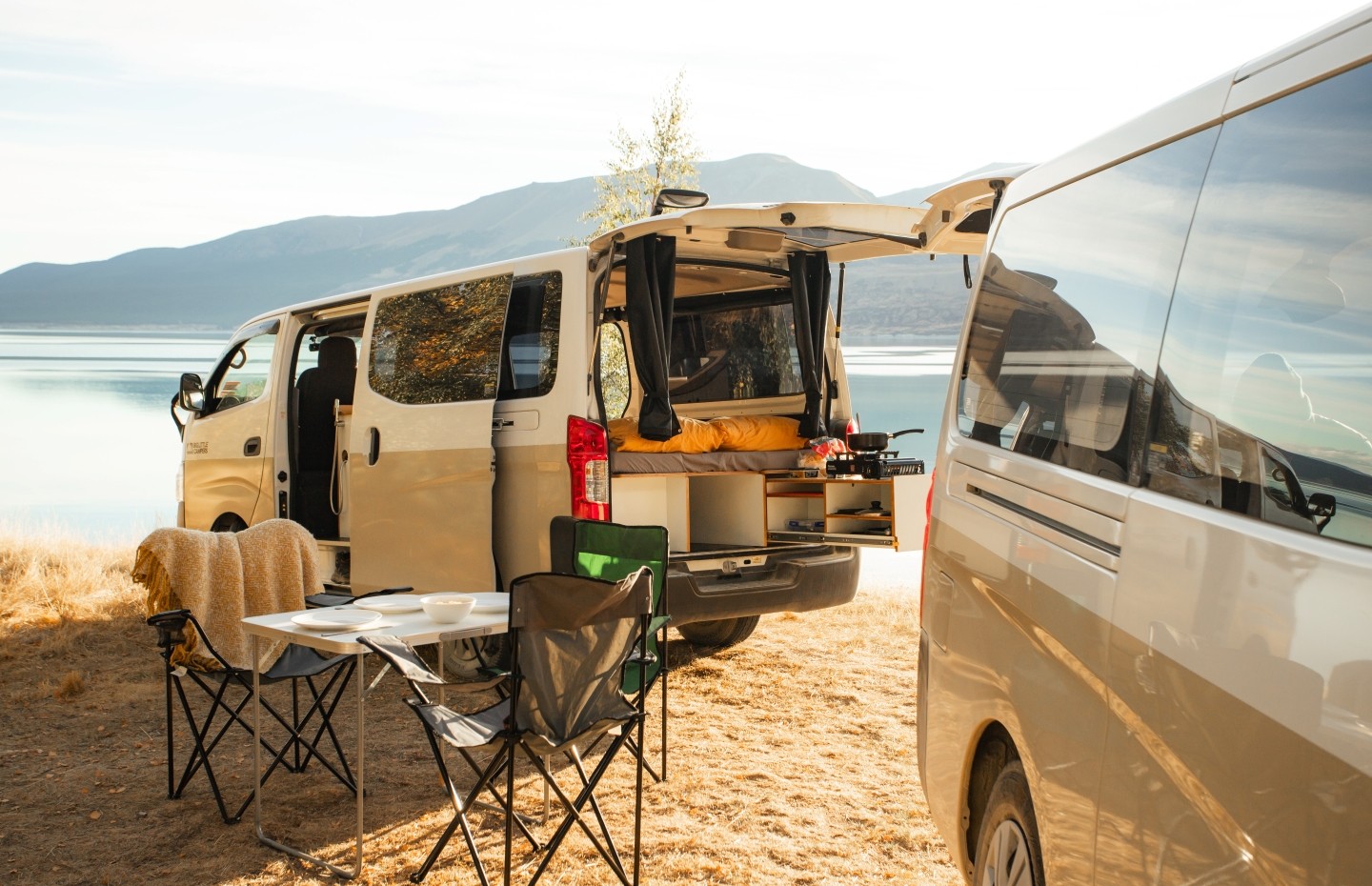
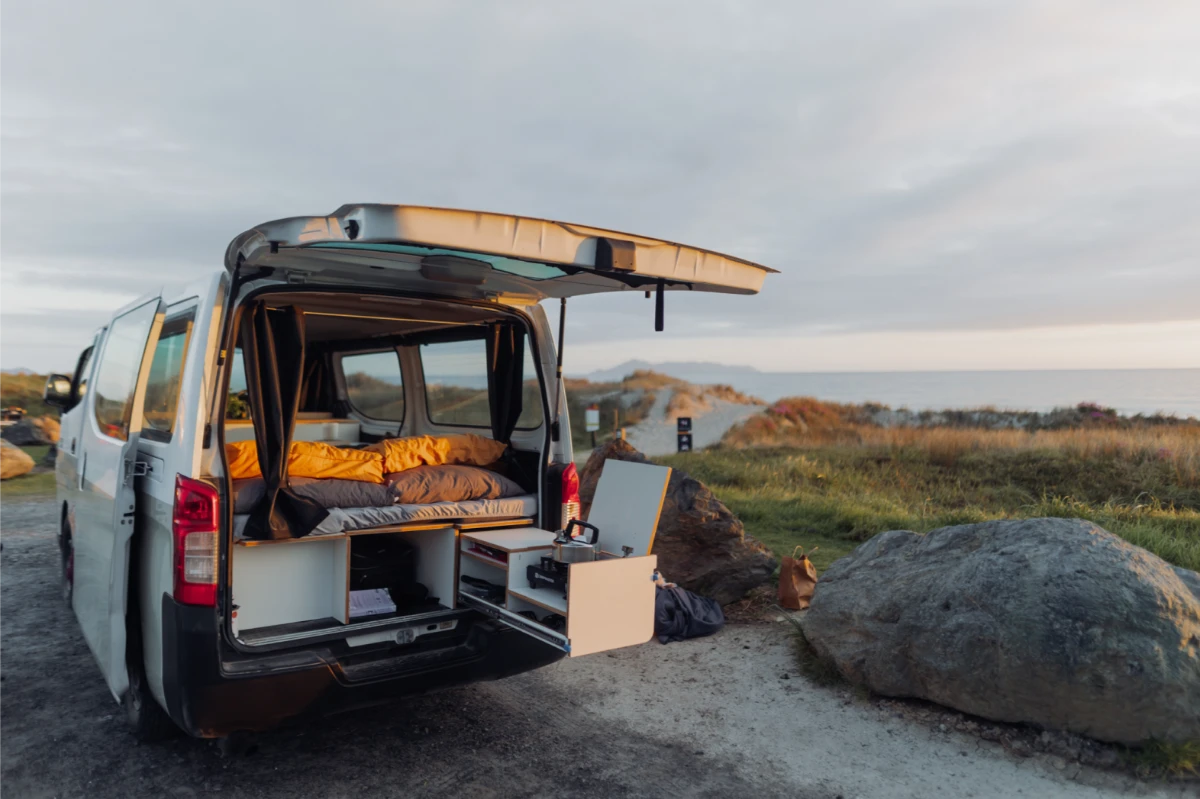
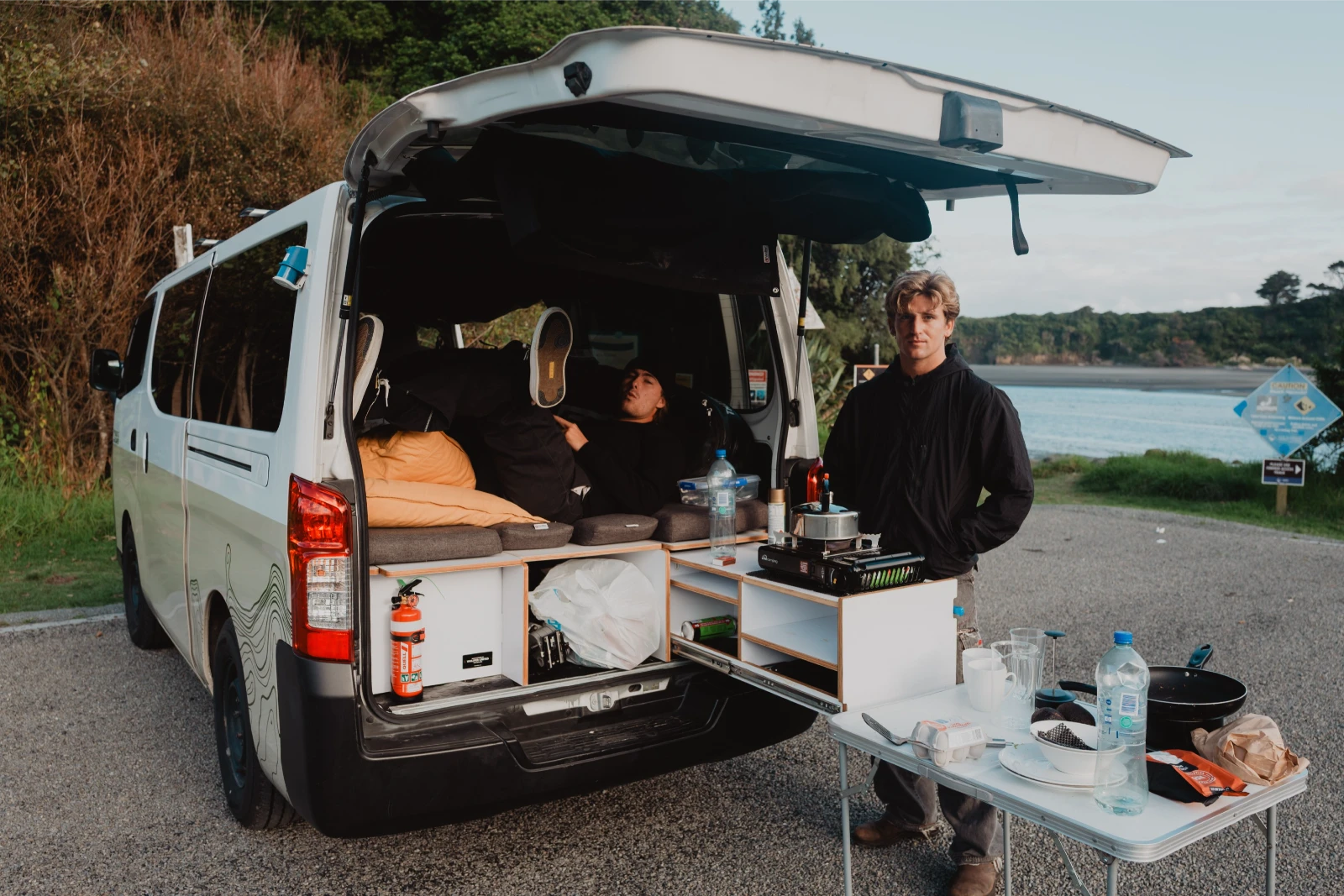
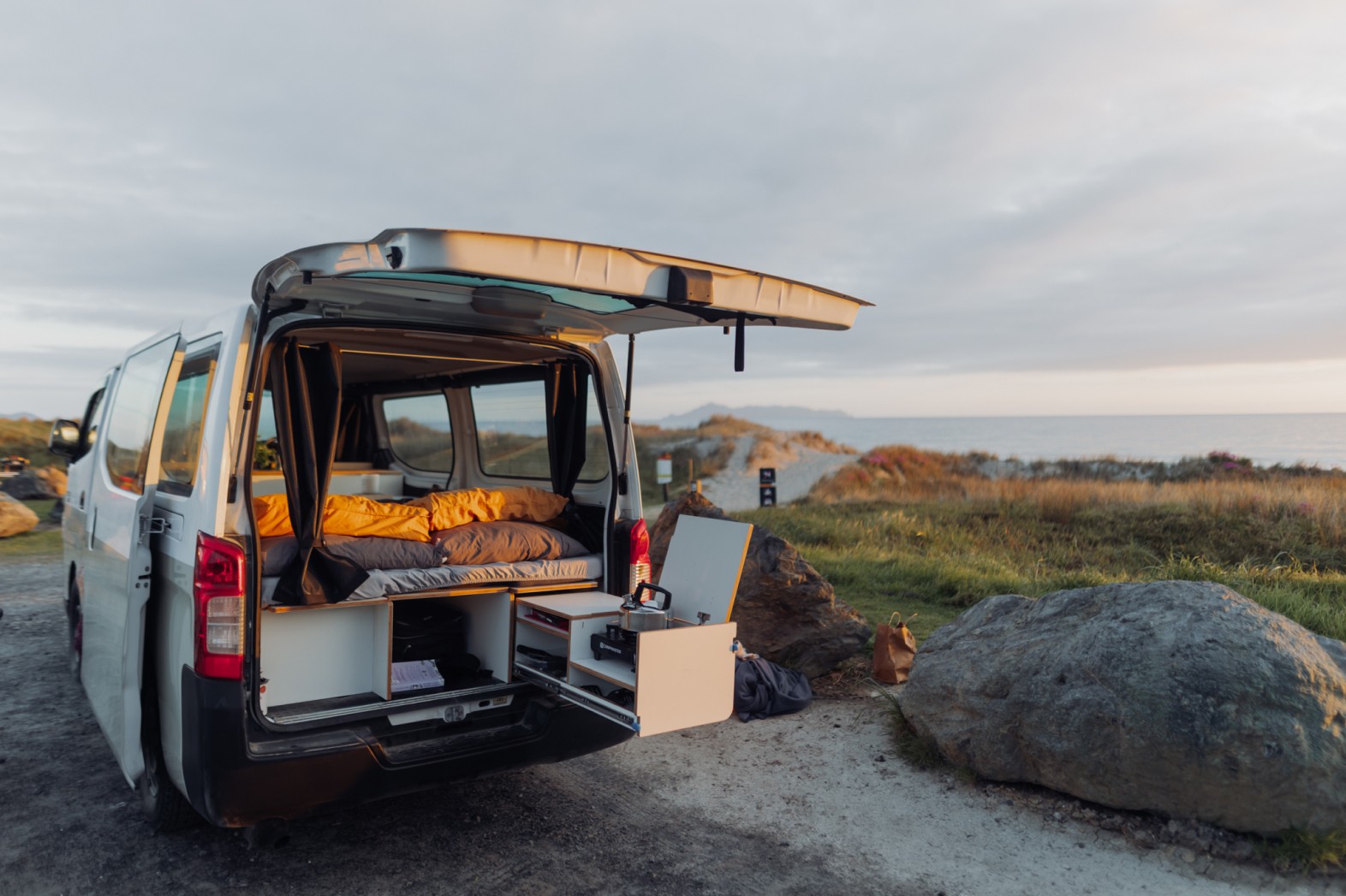
Heating: Which Vans Have It, Which Don'tDo campervans have heating NZ-wide? Some do, some don't, and for winter trips, it's worth choosing one that does. It depends on the operator and the model. Across the Big Little Campers fleet:
A diesel heater pulls from the main tank, sips around 0.2 litres per hour on a moderate setting. It helps hold the cabin at 18 to 20°C below freezing outside. That's the difference between an almost comfortable evening and a great one. |
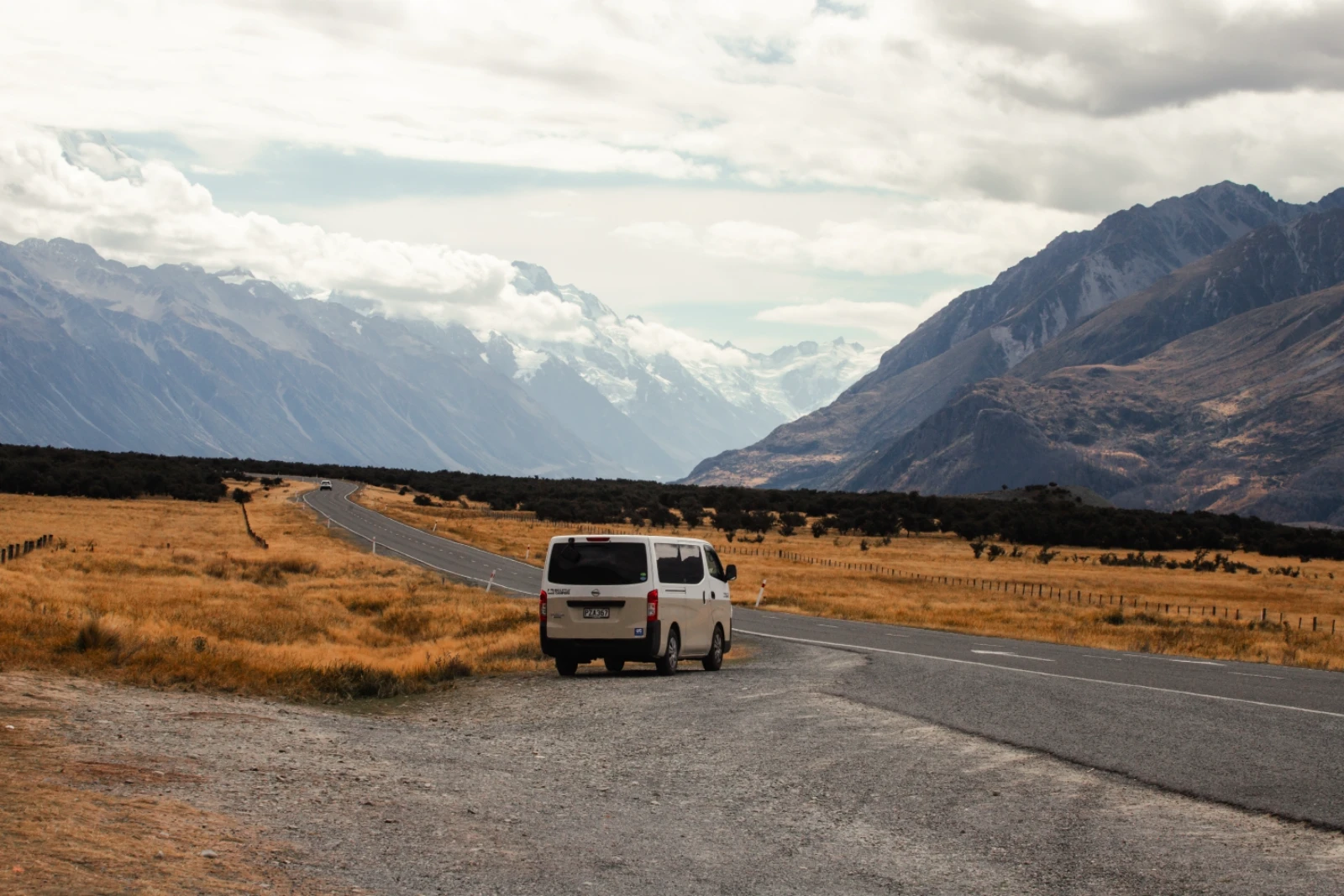
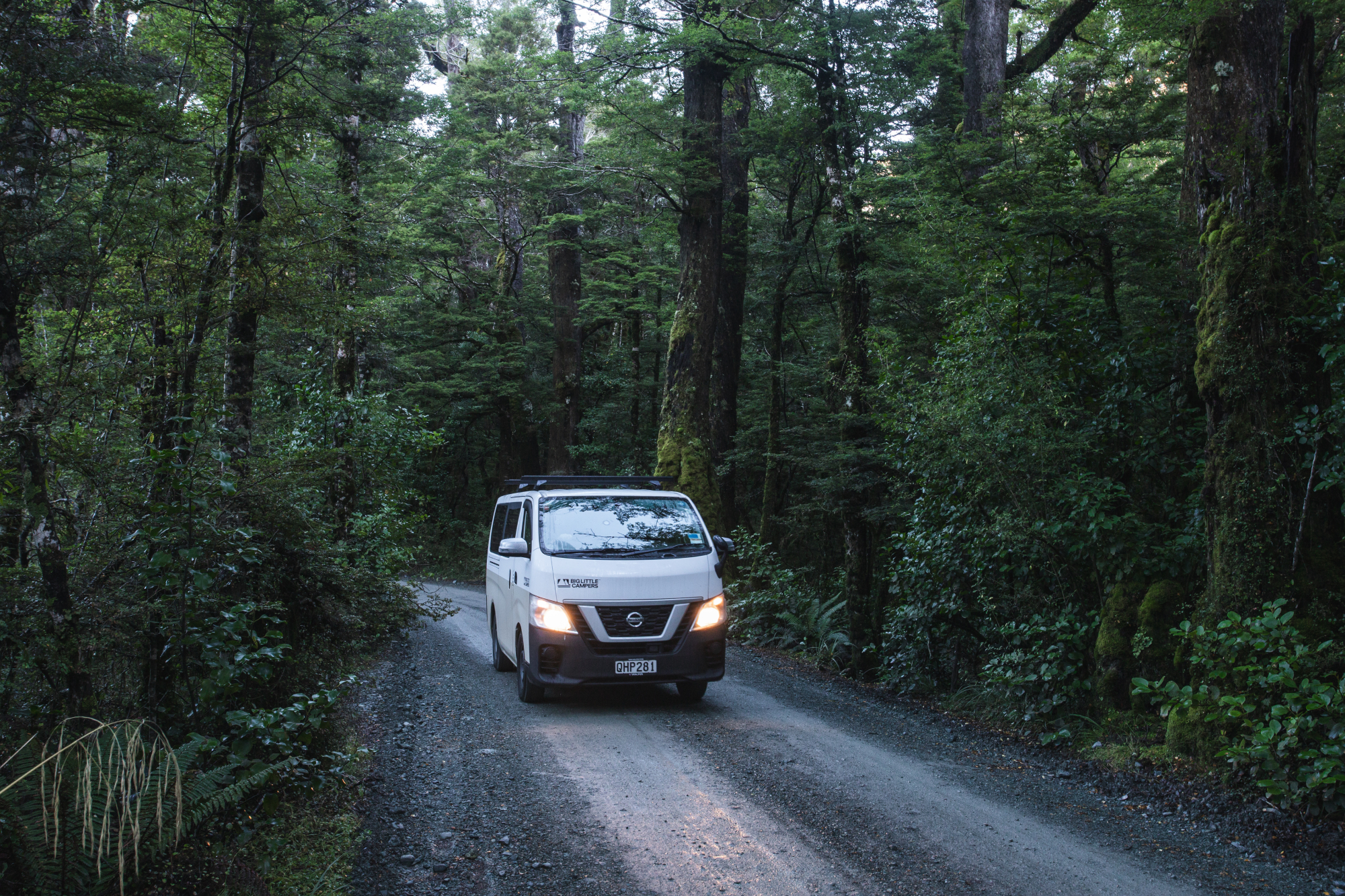
Enjoy a Campervan Winter in the South Island NZ, Through the Alpine PassThe South Island is where winter campervanning earns its reputation, and where planning matters most. Most of the alpine routes that matter cross the Southern Alps. The Waka Kotahi NZ Transport Agency reminds everyone to always check the weather and road conditions when driving in winter conditions. It also helps to carry snow chains on six main routes between June and November. This includes Arthur's and Porters Pass (SH73), Lewis Pass (SH7), Haast Pass (SH6), Lindis Pass (SH8), and the Milford Road into Milford Sound (SH94). The Crown Range Road runs between Wānaka and Queenstown and tops out at 1,076 metres. In winter conditions, all vehicles can be required to carry chains. This means three important things to remember:
|
Where to Park: Winter Campsites and Hot PoolsThe winter camping NZ itinerary that works alternates between two types of stays. Book a powered holiday park every two or three nights for a hot shower and battery top-up. Fill the gaps with freedom camping spots or DOC sites. Plenty of campsites stay open year-round, but not all. Here are some awesome June-to-August picks:
Check the Department of Conservation site for current opening hours, and download CamperMate or Rankers before you lose signal. |
|
What Else Wins in Winter (That Summer Can't Give You)There are a few things that you can only see and experience in the colder months. Long, clear nights bring out the stargazing. The breeding and migration season covers some of the country's most distinctive wildlife. The biggest winter festivals run from June through August. Here are the top three reasons that travellers come back during winter: Stargazing and the Aurora Australis. The Aoraki Mackenzie International Dark Sky Reserve around Tekapo gets its longest, clearest nights between June and August. This far south, you can catch the aurora on a good night. Winter wildlife and glaciers. Yellow-eyed penguins breed in winter on the Otago Peninsula. In The Catlins, Kaikoura's whale migration peaks in June and July. The Franz Josef Glacier on the West Coast looks its most striking in clear winter air. Winter festivals. The Queenstown Winter Festival runs for four days in late June with street parties and on-mountain races. LUMA Light Festival lights up Queenstown over Queen's Birthday weekend. Dunedin's Midwinter Carnival brings lantern parades and fire displays through the city. |
Winter Campervan Trip from Christchurch, Auckland, or Queenstown?The three main starting points come down to flights and ski plans. From Christchurch. Pick-up is in Harewood, ten minutes from the airport. Winter campervan hire Christchurch gives you a convenient starting point for exploring the South Island’s alpine routes and ski destinations. Christchurch averages 10°C in June with low rainfall, an easy first day before heading inland. The classic route has three legs. Christchurch to Lake Tekapo takes 3 hours. Tekapo to Wānaka via the Lindis Pass is another 3 hours. Wānaka to Queenstown over the Crown Range adds 1.5 hours. Allow 7 to 10 days minimum. From Queenstown. There's no Big Little Campers depot in Queenstown itself, but many travellers build routes through Queenstown after picking up in Christchurch. Queenstown remains the busiest winter hub thanks to four ski fields within an hour. Be sure to see Coronet Peak (13 June to 4 October 2026), The Remarkables (13 June to 11 October 2026), Cardrona, and Treble Cone. From Auckland. A North Island winter loop is the gentler option. Pick up in Māngere, head to Rotorua for geothermal pools, down to Taupō, and into Tongariro for Mt Ruapehu skiing. Coastal weather stays mild, and you avoid the alpine passes. Our North Island scenic drives guide covers routes that hold up in winter. |
Frequently Asked QuestionsWhat's the weather like campervanning in NZ in winter?Cold and clear, more than wet. Winter in New Zealand runs from June through August. The South Island averages 0 to 10°C, with mountain regions below 5°C. The North Island stays mild at 5 to 15°C. Rainfall drops in Canterbury and Central Otago compared to spring, so you'll get some of the clearest blue-sky days of the year. Can you freedom camp in winter in New Zealand?Yes, freedom camping rules apply year-round if your van is certified self-contained. The practical change in winter is that some sites have reduced facilities and a few close entirely. Always check the Department of Conservation site and CamperMate for the current status. How do I stop condensation in a campervan in winter?Crack a window or roof vent at night, even in the cold. Warm air inside meets the cold glass, and water forms otherwise. Wipe windows each morning with a microfibre cloth, and don't dry wet gear inside the van without ventilation. Are Cook Strait ferries reliable in winter?Mostly yes, but any campervan New Zealand winter itinerary crossing between islands should be flexible. Winter brings stronger winds and rougher seas. Interislander or Bluebridge sailings can be cancelled or rescheduled. Arrive at least 90 minutes early, keep buffer days around any ferry crossing, and check sailings the night before. Can I drive a campervan up to a ski field?No, ski-field access roads in NZ are off-limits to campervans between June and October. Park overnight at a Queenstown, Wānaka, Methven, or National Park holiday park and take the resort shuttle. Coronet Peak is 20 minutes from central Queenstown. The Remarkables is 40 to 45 minutes away. Cardrona is about an hour away, over the Crown Range. |
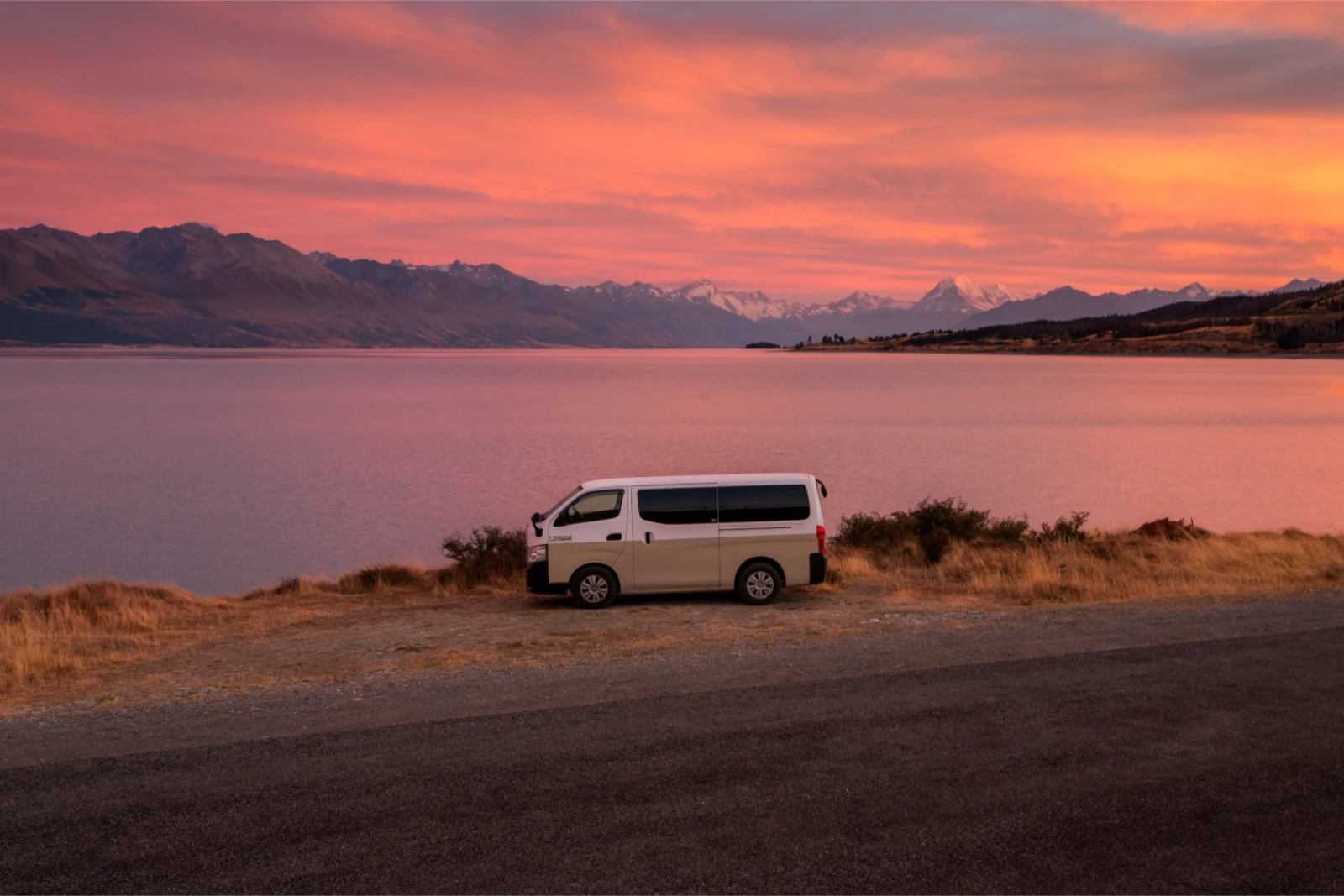
Get Your Winter Road Trip RightWinter road trips in NZ aren't complicated, but they do reward a bit of planning. The right van, proper heating, realistic driving days, and flexibility around weather make all the difference once you're out there. At BLC, we'll help match you with the right setup for the kind of winter trip you're planning, whether that's ski fields, hot pools, or just quieter roads and fewer crowds. Get in touch with our team, and we'll help you plan a winter campervan trip that's properly set up from day one. |
References
Air New Zealand. (2026). New Zealand weather and climate: When is the best time to visit? https://www.airnewzealand.ca/travel-inspiration-new-zealand-weather-climate
Department of Conservation. (2026). Freedom camping on public conservation land. https://www.doc.govt.nz/parks-and-recreation/places-to-stay/stay-at-a-campsite/freedom-camping/
NZ Transport Agency Waka Kotahi. (2026). Winter driving. https://www.nzta.govt.nz/safety/driving-safely/winter-driving/
NZ Transport Agency Waka Kotahi. (2026). Journey planner: Highway conditions. https://www.journeys.nzta.govt.nz/highway-conditions
Tourism New Zealand. (2026). New Zealand's top 10 hot pools. https://www.newzealand.com/us/feature/top-10-hot-pools/
|
Winter's one of the best times to road-trip in New Zealand if you're set up properly. The roads are quieter, freedom camping spots are emptier, and places like Tekapo, Wānaka, and Queenstown look even better with snow on the mountains. The trade-off is that winter asks a bit more of both your van and your planning. Heating matters. Road conditions matter. And some campsites and alpine routes need a bit more thought than they do in summer. Get those parts right, and you trade summer queues for empty lookouts, snow-dusted lakes, and ski-field access. |
Quick SummaryCampervanning in winter in New Zealand is doable, especially from June to August when ski fields are running, and the South Island lights up with snow. North Island days sit between 5 and 15°C. Inland South Island spots like Queenstown, Wānaka, and Tekapo see temperatures dropping to around 3°C in the day and -3°C at night. You'll want a self-contained van with proper insulation, ideally a diesel heater for the colder routes. Alpine passes like the Crown Range, Lindis Pass, and Arthur's Pass also required snow chains. Big Little Campers winter rates start from $80 NZD per day in June, July, and August. Trade-offs include shorter daylight and the occasional road closure. You also need to plan campsites, as some DOC sites reduce their hours in the off-season. |
|
|
|
Can You Campervan in Winter in NZ?Yes, and honestly, winter is one of the best times to do it if you like quieter travel. Summer gets the attention, but winter gives you empty lookouts, snow-covered mountains, easier freedom camping access, and far fewer people everywhere you go. Ski fields are running, hot pools feel even better in cold weather, and places like Milford Sound can feel almost surreal on a clear winter morning. The weather changes a lot depending on where you are. Auckland and the Bay of Islands stay mild at 12 to 15°C. Christchurch sits around 10°C with overnight frosts. Queenstown highs are 6 to 8°C with nights down to -3°C in July. Tekapo and the Mackenzie are the coldest, often falling at -5°C, per Air New Zealand's seasonal guide. A self-contained, well-insulated campervan handles all of it. A tired old van with single-glazed windows is a very different experience. How Cold Does It Get, and Is It Manageable?Cold enough that setup matters, but very manageable with the right gear. The coldest areas are inland South Island regions like Tekapo, the Mackenzie Basin, Wānaka, and Queenstown. Overnight temperatures regularly sit below zero in July and August. Coastal North Island trips are much milder and easier overall. The biggest comfort upgrade is a diesel heater inside the van (more on that next). After that, the rest of the kit is unglamorous but essential. Good insulation. A four-season sleeping bag rated to -5°C, with a wool blanket on top. Hot water bottles. An electric blanket for nights at powered sites. Pack proper warm clothes for inside the van too. Thick socks, a beanie, and a fleece after sunset make more of a difference than any single piece of kit. An extra layer over the sleeping bag turns a cold night into a comfortable one. |
Heating: Which Vans Have It, Which Don'tDo campervans have heating NZ-wide? Some do, some don't, and for winter trips, it's worth choosing one that does. It depends on the operator and the model. Across the Big Little Campers fleet:
A diesel heater pulls from the main tank, sips around 0.2 litres per hour on a moderate setting. It helps hold the cabin at 18 to 20°C below freezing outside. That's the difference between an almost comfortable evening and a great one. |
Enjoy a Campervan Winter in the South Island NZ, Through the Alpine PassThe South Island is where winter campervanning earns its reputation, and where planning matters most. Most of the alpine routes that matter cross the Southern Alps. The Waka Kotahi NZ Transport Agency reminds everyone to always check the weather and road conditions when driving in winter conditions. It also helps to carry snow chains on six main routes between June and November. This includes Arthur's and Porters Pass (SH73), Lewis Pass (SH7), Haast Pass (SH6), Lindis Pass (SH8), and the Milford Road into Milford Sound (SH94). The Crown Range Road runs between Wānaka and Queenstown and tops out at 1,076 metres. In winter conditions, all vehicles can be required to carry chains. This means three important things to remember:
|
Where to Park: Winter Campsites and Hot PoolsThe winter camping NZ itinerary that works alternates between two types of stays. Book a powered holiday park every two or three nights for a hot shower and battery top-up. Fill the gaps with freedom camping spots or DOC sites. Plenty of campsites stay open year-round, but not all. Here are some awesome June-to-August picks:
Check the Department of Conservation site for current opening hours, and download CamperMate or Rankers before you lose signal. |
|
What Else Wins in Winter (That Summer Can't Give You)There are a few things that you can only see and experience in the colder months. Long, clear nights bring out the stargazing. The breeding and migration season covers some of the country's most distinctive wildlife. The biggest winter festivals run from June through August. Here are the top three reasons that travellers come back during winter: Stargazing and the Aurora Australis. The Aoraki Mackenzie International Dark Sky Reserve around Tekapo gets its longest, clearest nights between June and August. This far south, you can catch the aurora on a good night. Winter wildlife and glaciers. Yellow-eyed penguins breed in winter on the Otago Peninsula. In The Catlins, Kaikoura's whale migration peaks in June and July. The Franz Josef Glacier on the West Coast looks its most striking in clear winter air. Winter festivals. The Queenstown Winter Festival runs for four days in late June with street parties and on-mountain races. LUMA Light Festival lights up Queenstown over Queen's Birthday weekend. Dunedin's Midwinter Carnival brings lantern parades and fire displays through the city. |
Winter Campervan Trip from Christchurch, Auckland, or Queenstown?The three main starting points come down to flights and ski plans. From Christchurch. Pick-up is in Harewood, ten minutes from the airport. Winter campervan hire Christchurch gives you a convenient starting point for exploring the South Island’s alpine routes and ski destinations. Christchurch averages 10°C in June with low rainfall, an easy first day before heading inland. The classic route has three legs. Christchurch to Lake Tekapo takes 3 hours. Tekapo to Wānaka via the Lindis Pass is another 3 hours. Wānaka to Queenstown over the Crown Range adds 1.5 hours. Allow 7 to 10 days minimum. From Queenstown. There's no Big Little Campers depot in Queenstown itself, but many travellers build routes through Queenstown after picking up in Christchurch. Queenstown remains the busiest winter hub thanks to four ski fields within an hour. Be sure to see Coronet Peak (13 June to 4 October 2026), The Remarkables (13 June to 11 October 2026), Cardrona, and Treble Cone. From Auckland. A North Island winter loop is the gentler option. Pick up in Māngere, head to Rotorua for geothermal pools, down to Taupō, and into Tongariro for Mt Ruapehu skiing. Coastal weather stays mild, and you avoid the alpine passes. Our North Island scenic drives guide covers routes that hold up in winter. |
Frequently Asked QuestionsWhat's the weather like campervanning in NZ in winter?Cold and clear, more than wet. Winter in New Zealand runs from June through August. The South Island averages 0 to 10°C, with mountain regions below 5°C. The North Island stays mild at 5 to 15°C. Rainfall drops in Canterbury and Central Otago compared to spring, so you'll get some of the clearest blue-sky days of the year. Can you freedom camp in winter in New Zealand?Yes, freedom camping rules apply year-round if your van is certified self-contained. The practical change in winter is that some sites have reduced facilities and a few close entirely. Always check the Department of Conservation site and CamperMate for the current status. How do I stop condensation in a campervan in winter?Crack a window or roof vent at night, even in the cold. Warm air inside meets the cold glass, and water forms otherwise. Wipe windows each morning with a microfibre cloth, and don't dry wet gear inside the van without ventilation. Are Cook Strait ferries reliable in winter?Mostly yes, but any campervan New Zealand winter itinerary crossing between islands should be flexible. Winter brings stronger winds and rougher seas. Interislander or Bluebridge sailings can be cancelled or rescheduled. Arrive at least 90 minutes early, keep buffer days around any ferry crossing, and check sailings the night before. Can I drive a campervan up to a ski field?No, ski-field access roads in NZ are off-limits to campervans between June and October. Park overnight at a Queenstown, Wānaka, Methven, or National Park holiday park and take the resort shuttle. Coronet Peak is 20 minutes from central Queenstown. The Remarkables is 40 to 45 minutes away. Cardrona is about an hour away, over the Crown Range. |
Get Your Winter Road Trip RightWinter road trips in NZ aren't complicated, but they do reward a bit of planning. The right van, proper heating, realistic driving days, and flexibility around weather make all the difference once you're out there. At BLC, we'll help match you with the right setup for the kind of winter trip you're planning, whether that's ski fields, hot pools, or just quieter roads and fewer crowds. Get in touch with our team, and we'll help you plan a winter campervan trip that's properly set up from day one. |
References
Air New Zealand. (2026). New Zealand weather and climate: When is the best time to visit? https://www.airnewzealand.ca/travel-inspiration-new-zealand-weather-climate
Department of Conservation. (2026). Freedom camping on public conservation land. https://www.doc.govt.nz/parks-and-recreation/places-to-stay/stay-at-a-campsite/freedom-camping/
NZ Transport Agency Waka Kotahi. (2026). Winter driving. https://www.nzta.govt.nz/safety/driving-safely/winter-driving/
NZ Transport Agency Waka Kotahi. (2026). Journey planner: Highway conditions. https://www.journeys.nzta.govt.nz/highway-conditions
Tourism New Zealand. (2026). New Zealand's top 10 hot pools. https://www.newzealand.com/us/feature/top-10-hot-pools/
Read more







.jpg)
.jpg)
.jpg)
.jpg)
.jpg)

.jpg)



.jpg)