Chat with a human
Let us help you pick the perfect camper for your once in a lifetime adventure
|
Most people picture New Zealand in summer: long beach days, busy campsites, and often queues at the famous lookouts. But the seasons in New Zealand each open a different kind of road trip. The one travellers tend to skip might be the best of the lot. We have driven these roads in every kind of weather, and winter never ceases to surprise us. Fewer people, snow sitting low on the Southern Alps, and night skies you can actually see. |
Quick SummaryNew Zealand has four seasons. Because it sits in the Southern Hemisphere, they run opposite to the northern half of the world. Summer covers December to February, autumn March to May, winter June to August, and spring September to November. July is the coldest month, and January and February are the warmest. Still, every season is road-trip weather in its own way. Summer brings beaches and long daylight, autumn turns Central Otago gold, spring greens everything back up, and winter hands you snow-capped mountains and clear, quiet roads. For a campervan trip, winter is the season most people overlook and the one we keep coming back to. The South Island gets the bulk of the snow and the best of the ski fields, while the towns and main roads stay open and far less crowded. You will want a van set up for the cold (hot showers, cozy beds, and an easy-to-reach kettle) as well as a plan for alpine driving, but sort those two, and a New Zealand winter on four wheels is hard to beat. |
|
The Four Seasons in New ZealandNew Zealand runs on four three-month seasons, set by the Southern Hemisphere calendar. Summer falls between December and February, autumn between March and May, winter from June to August, and spring from September to November. July is the coldest month, and January and February are typically the warmest. Here is how the seasons in New Zealand travel.
Temperatures swing more by location than by date. In a typical winter, Auckland rarely drops below about 7°C. Christchurch sits around minus 2 to 11°C. Inland Queenstown runs from roughly minus 1°C overnight to 8°C by day, according to Tourism New Zealand. The far north stays mild year-round, while the deep south and the mountains do the heavy lifting on cold. |
|
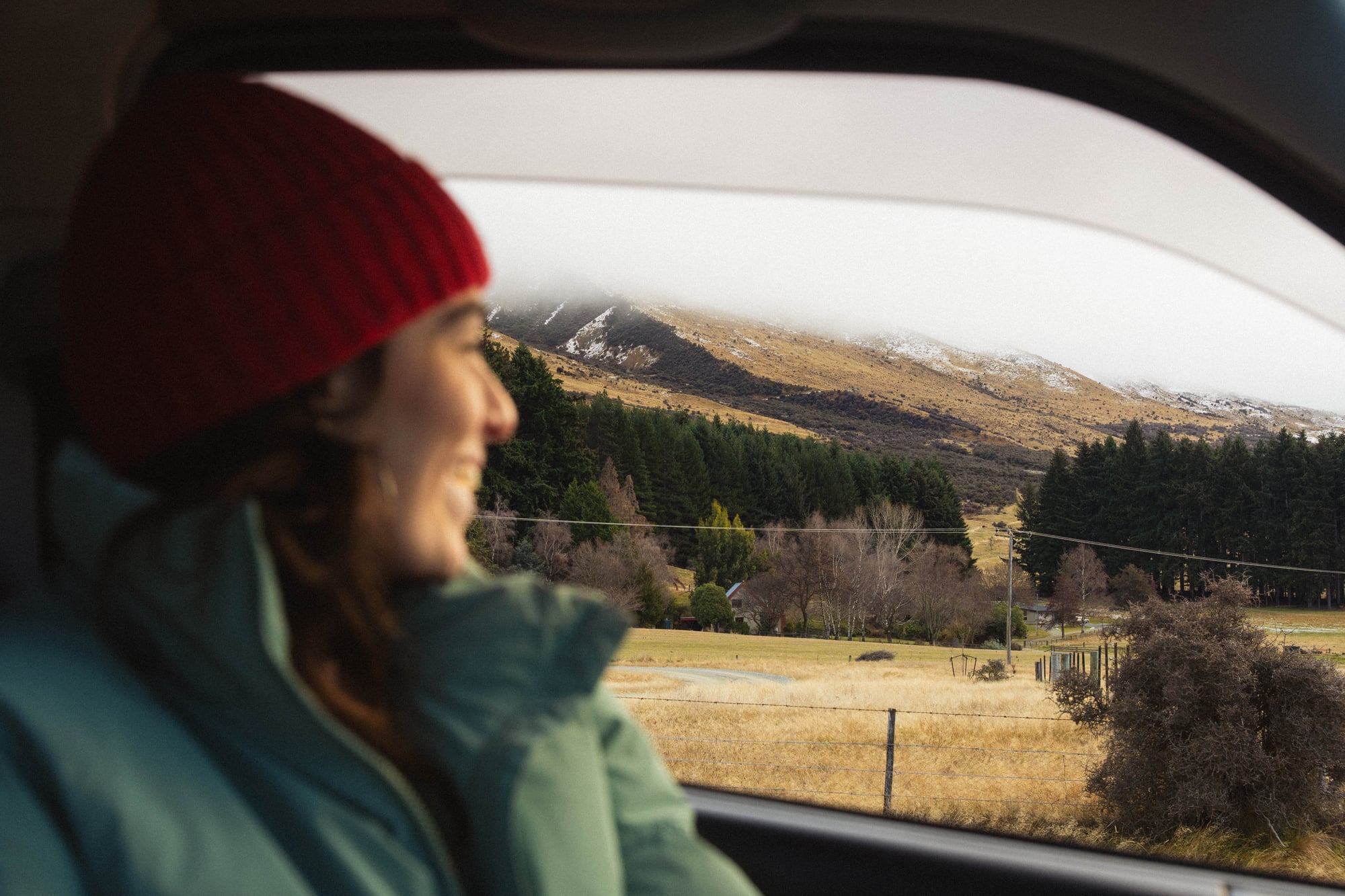
What New Zealand's Climate Means on the RoadNew Zealand's climate runs from subtropical in the far north to cool temperate in the deep south, with proper alpine conditions in the mountains. Packed into a country you can drive end to end in a few days, that range makes the weather shift fast. The mountain ranges down the spine of the country split the wet West Coast from the drier East. You can go from the rainforest to the tussock in a couple of hours. According to NIWA, mean annual NZ temperatures sit near 10°C in the south and 16°C in the north. They drop about 0.7°C for every 100 metres you climb. That is why a sunny valley floor can turn to snow at the top of a pass. The practical takeaway: pack layers and a waterproof while keeping sunscreen handy in winter. |
Why Winter Is the Season Most Travellers UnderrateThe New Zealand winter season from June to August is the country's quietest stretch for travel. For a road trip, that is the appeal. You get snow in the Southern Alps and short queues at the big sights. You'll get a handful of outdoor activities you cannot do the rest of the year. The reason most travellers return to this place is the snow. The Southern Alps and the central North Island volcanoes turn white, and the ski fields open for winter sports. Off the slopes, the cold makes everything else better. Hot pools feel twice as good with frost on the ground, and the long, dark, clear nights are made for stargazing. Tourism New Zealand frames a Kiwi winter around ski resorts, alpine hikes, whale watching, hot pools, and the fascinating aurora. |
|
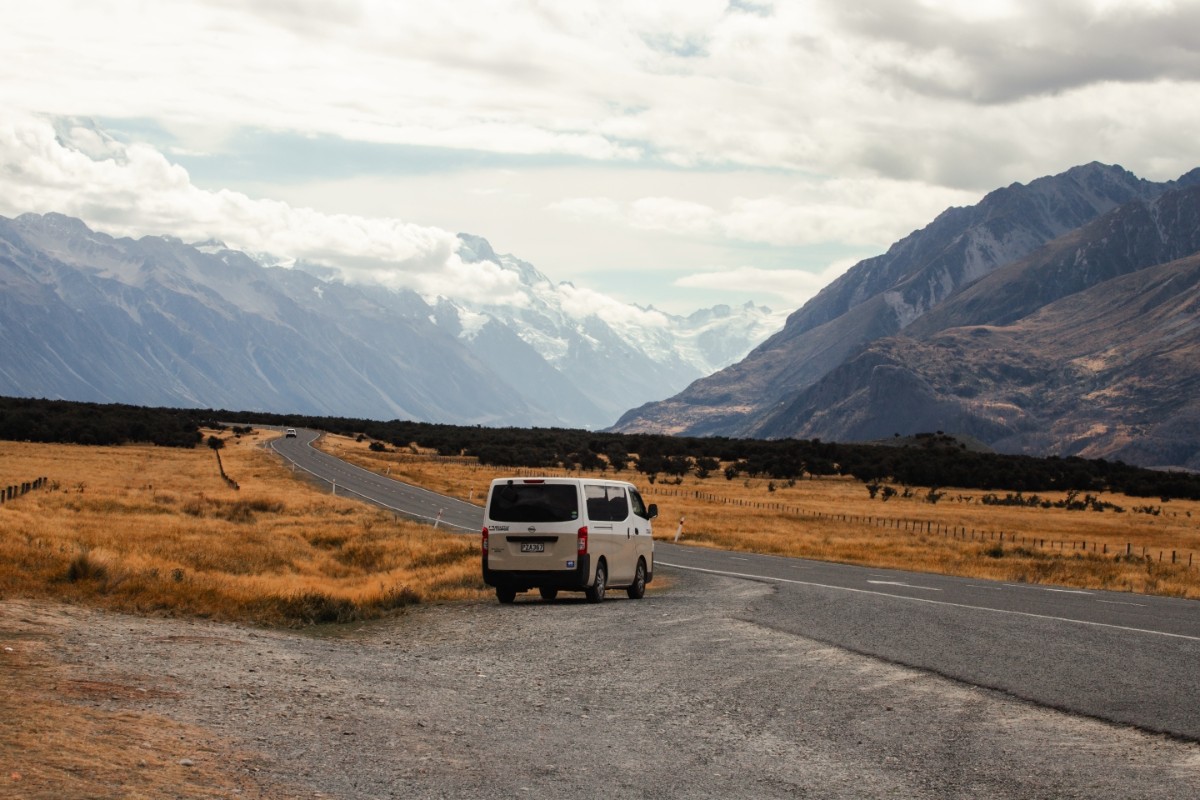
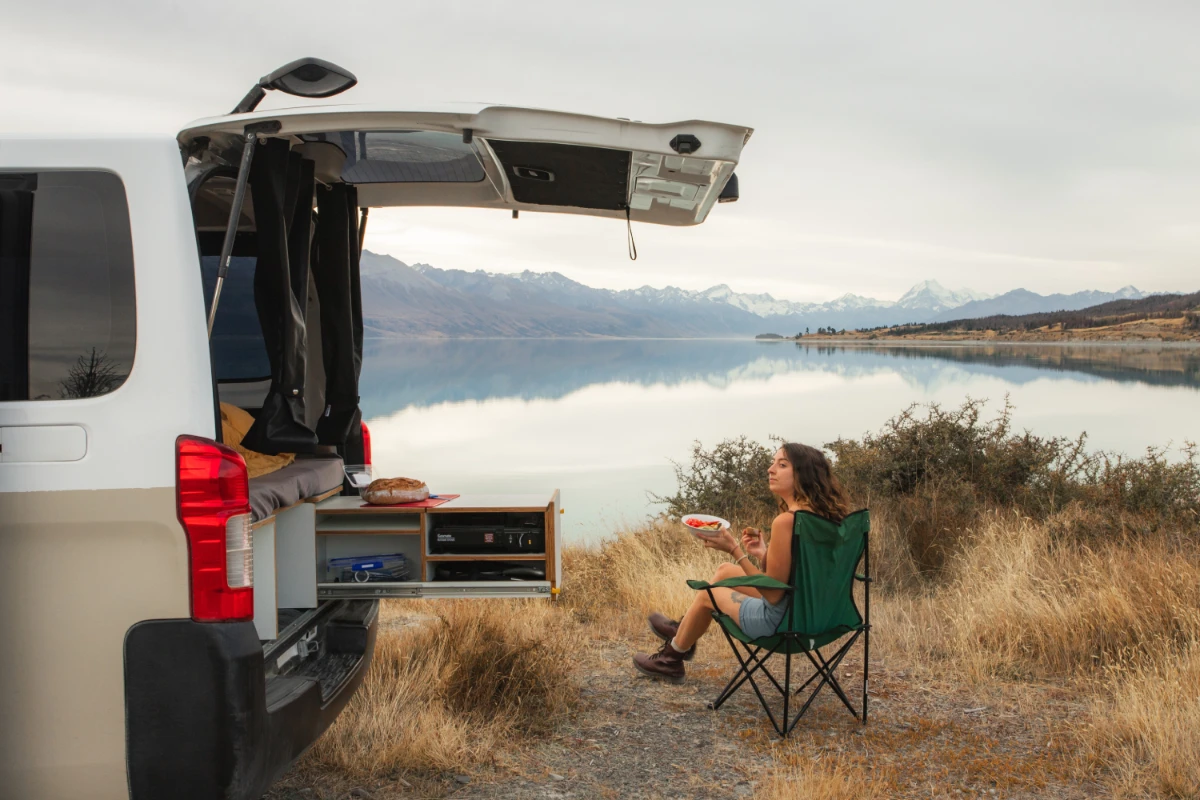
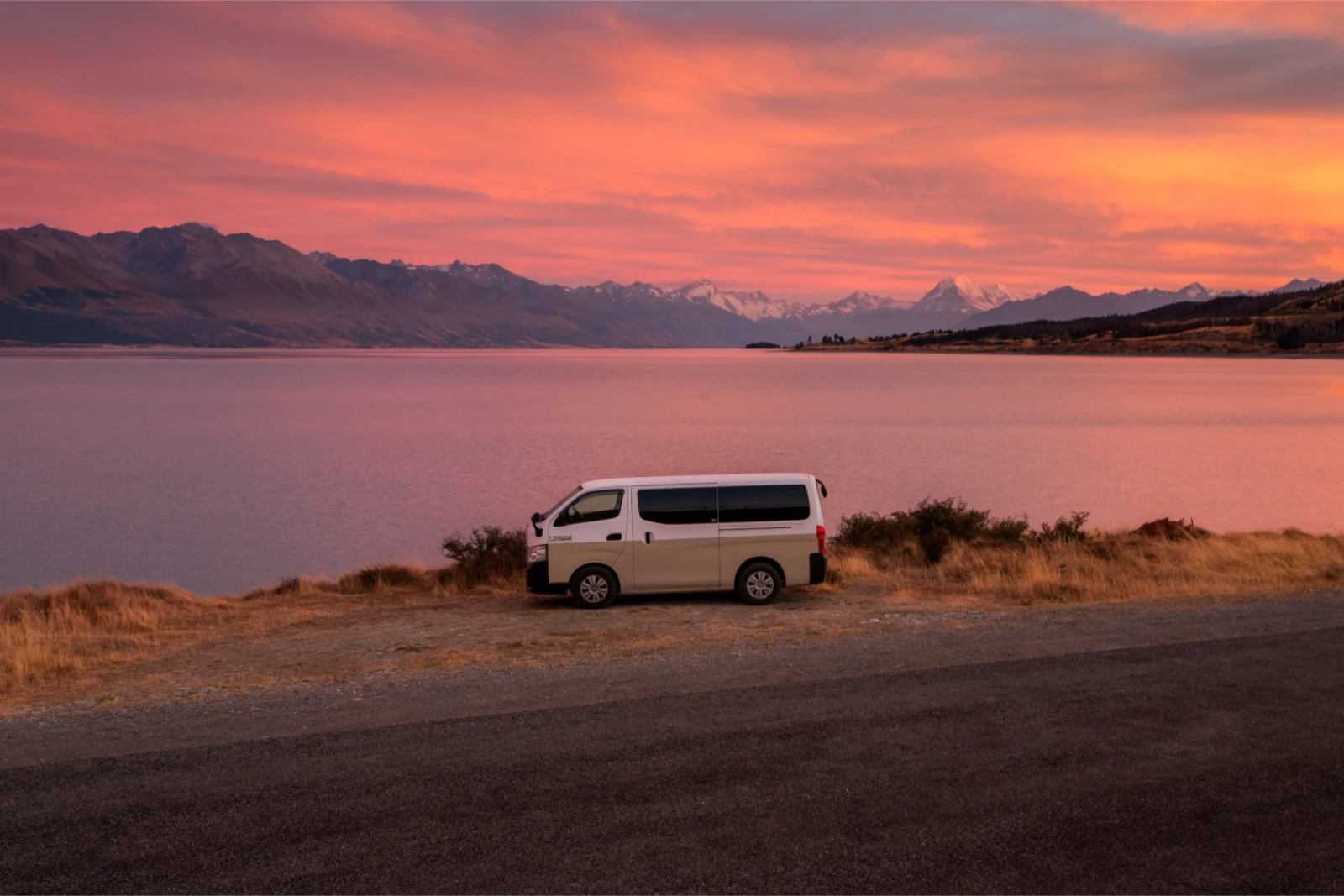
Winter in the South Island: Where to Drive Your VanWinter in the South Island of New Zealand is where the season earns its reputation. Most of the snow and the major skiing areas sit down south, within a few hours of each other.For travellers planning a winter route through the region, South Island campervan hire from Christchurch makes it easy to reach these alpine destinations with the right setup for colder conditions. Queenstown and WānakaQueenstown and Wānaka are the heart of South Island skiing and snowboarding. Coronet Peak and The Remarkables sit above Queenstown, with night skiing some evenings. Cardrona and Treble Cone look down on Wānaka. Cardrona is the country's largest skiable area. The season runs roughly mid-June into October, with the fields busiest over the July school holidays. After you have hit the slopes, there are plenty of things to do in Queenstown in winter. Much of it runs year-round: biking the Queenstown Trail, hiking the trails above town, wine tasting out in Gibbston Valley, and soaking at the Onsen hot pools. You may also fancy a cruise across Lake Wakatipu to Walter Peak on the century-old TSS Earnslaw steamship. Lake Tekapo and Aoraki/Mt CookLake Tekapo and Aoraki/Mt Cook are the South Island's winter showstoppers for big skies and big mountains. Tekapo sits inside one of the world's largest dark sky reserves. Winter's long, crisp nights make the stargazing about as good as it gets. The Tekapo hot pools are nearby to thaw out afterwards. Up the road at Aoraki/Mt Cook, clear, sunny days are the ones to walk the Hooker Valley Track. It is one of the best winter hikes in New Zealand's South Island. The country's highest peak waits at the end. Christchurch and CanterburyChristchurch is the most practical winter base in New Zealand, and an easy place to pick up a van. It sits on the east coast of the South Island. Mt Hutt is around 90 minutes from town near Methven. It is one of the South Island's most reliable ski fields for snow, and the closest big field to the city. North of town, the thermal pools at Hanmer Springs make a tidy winter weekend. From here, it is a straight shot south, and our Christchurch to Queenstown guide maps the stops if you want to build a New Zealand South Island winter road trip into one itinerary. For a longer loop, our South Island planning guide covers the rest. |
|
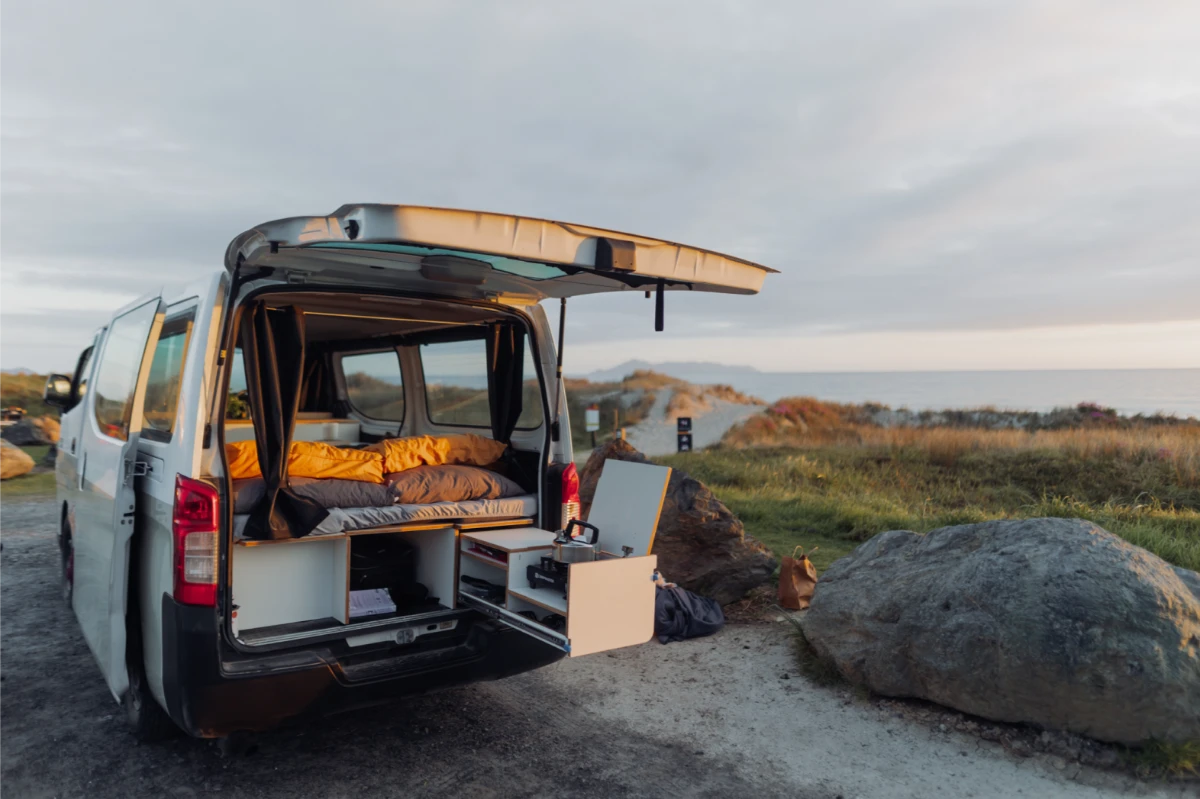
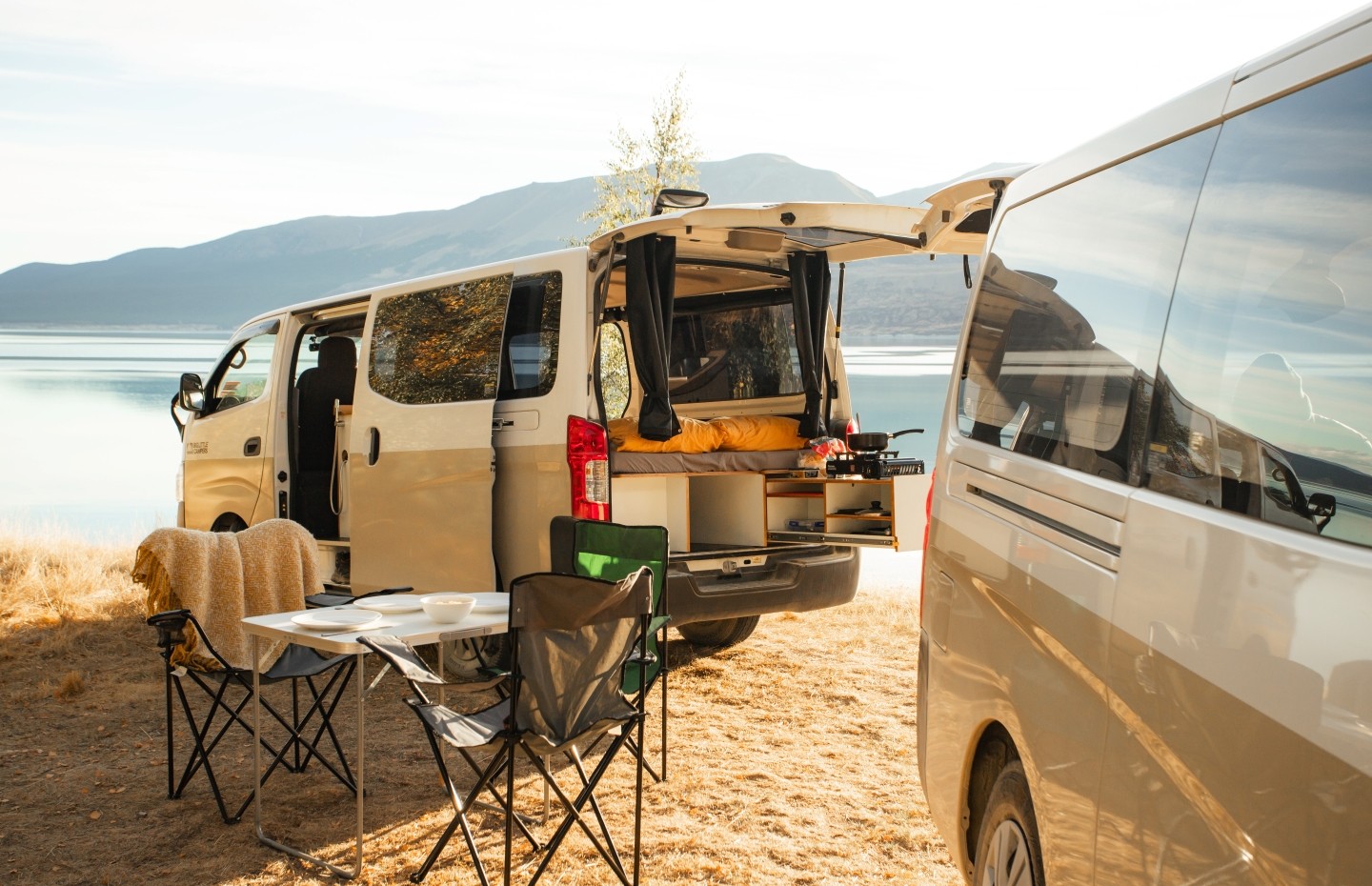
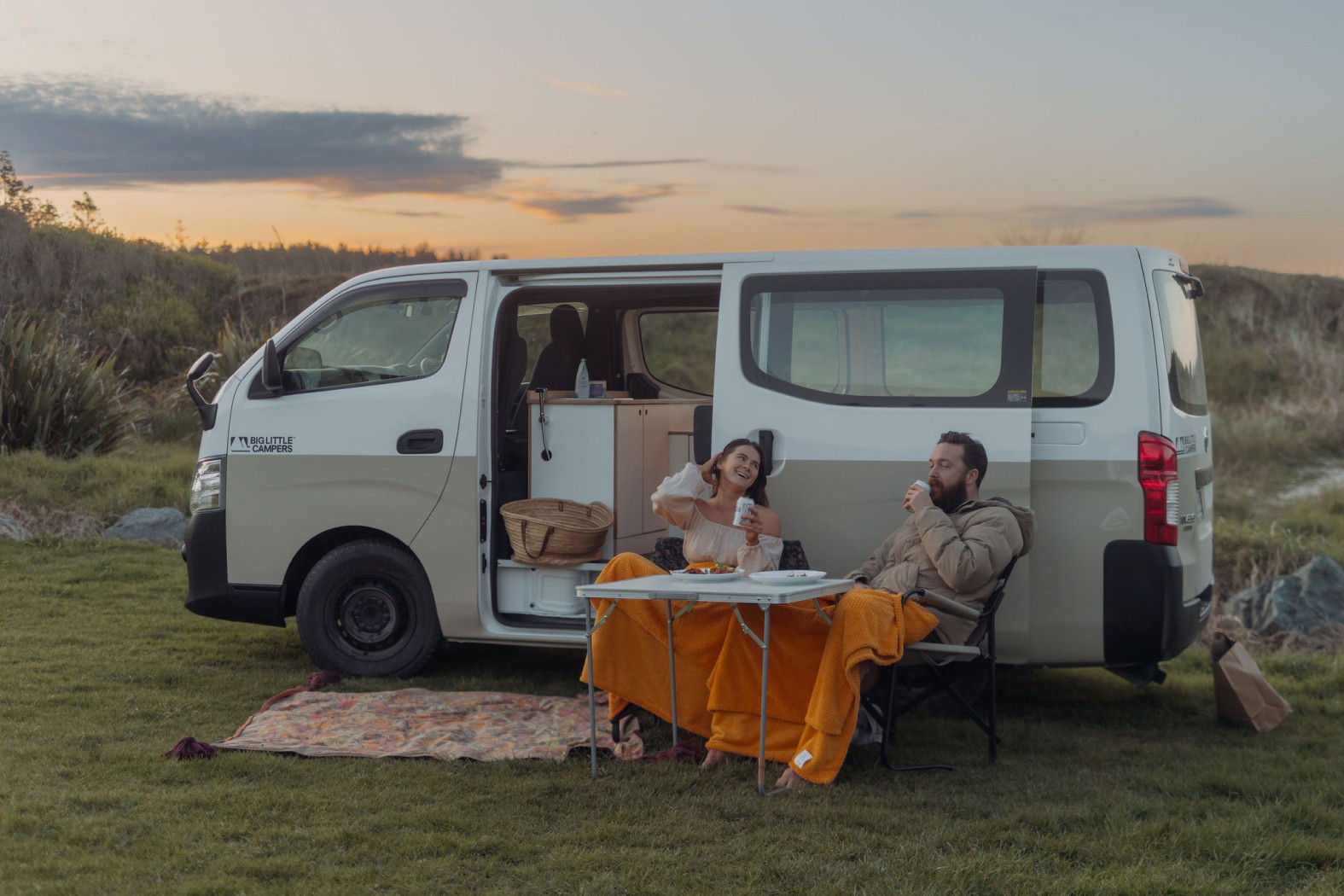
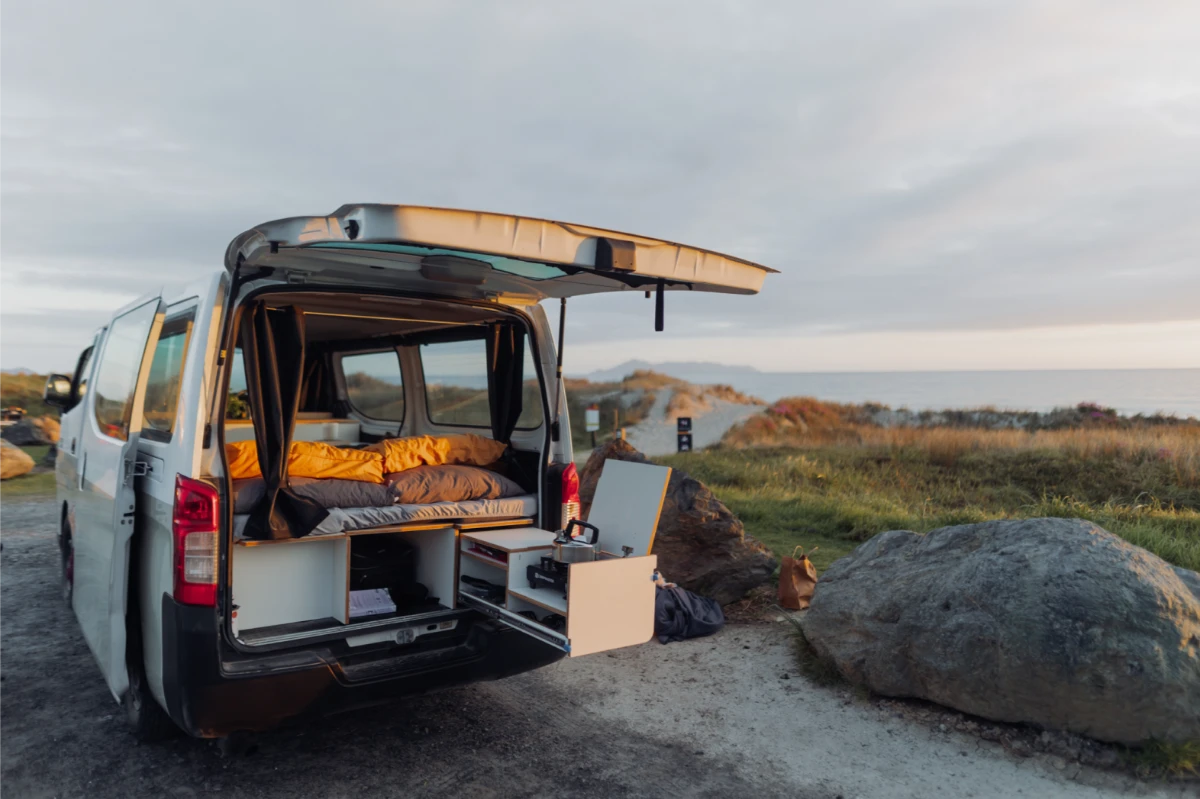
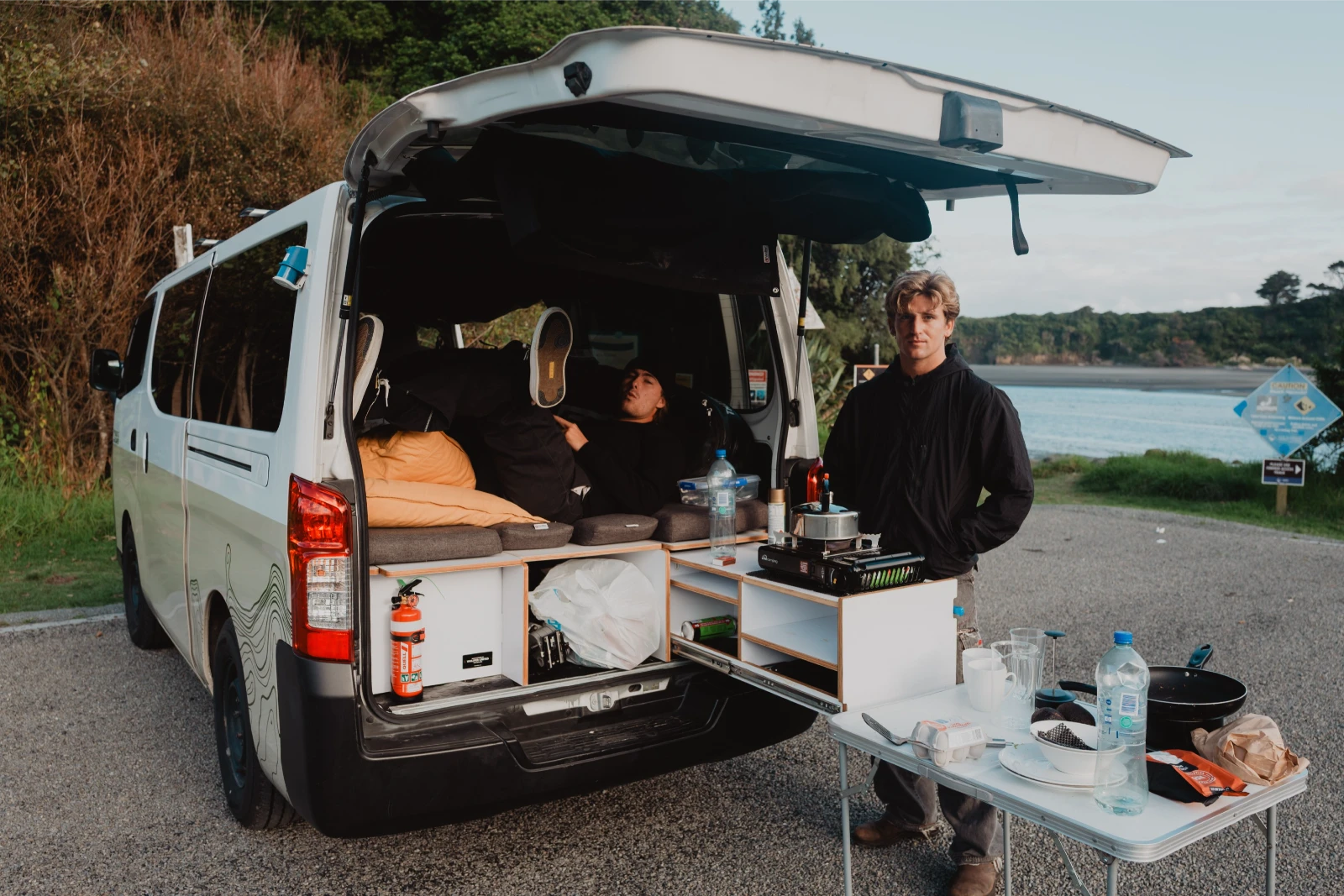
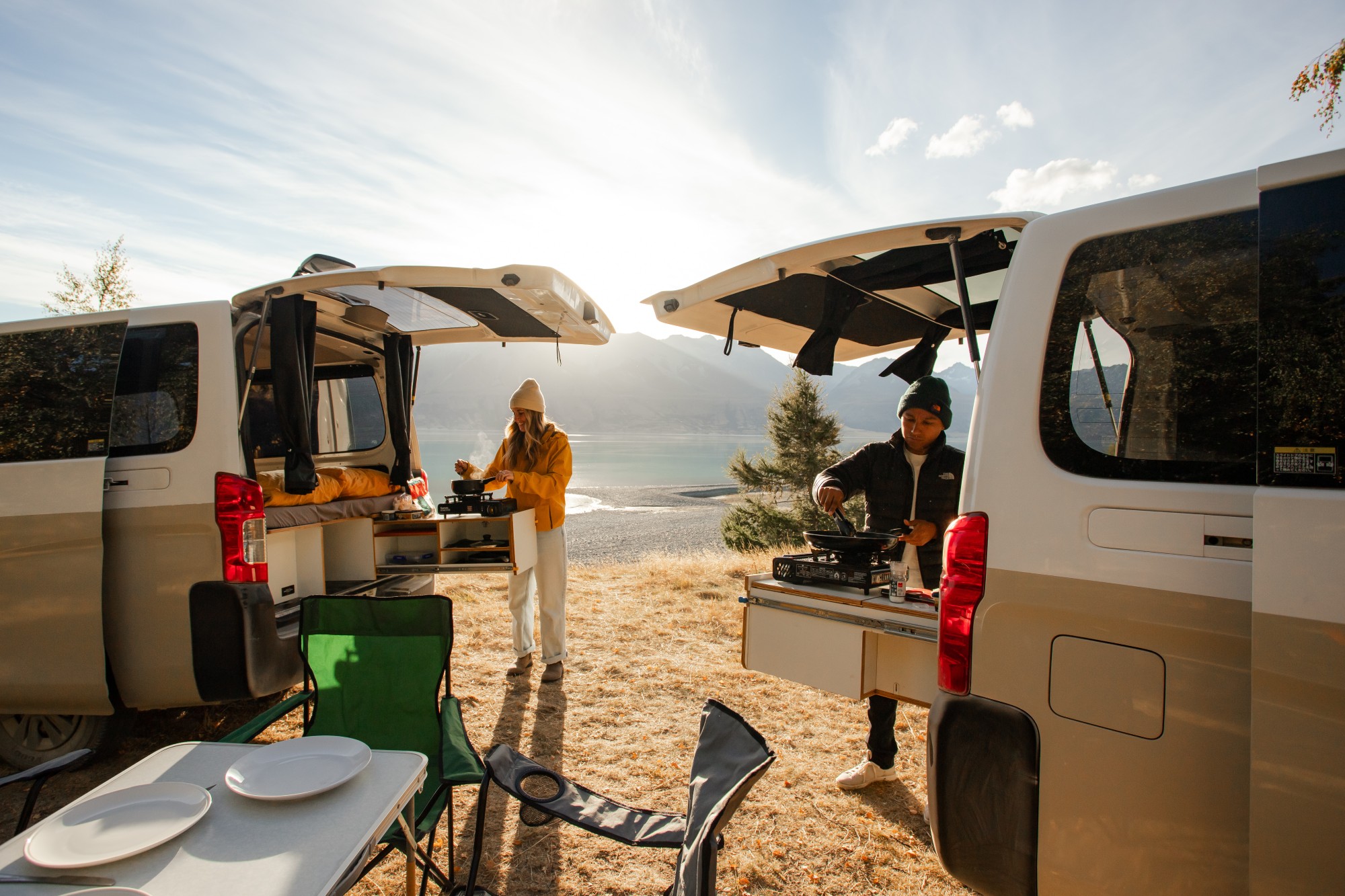
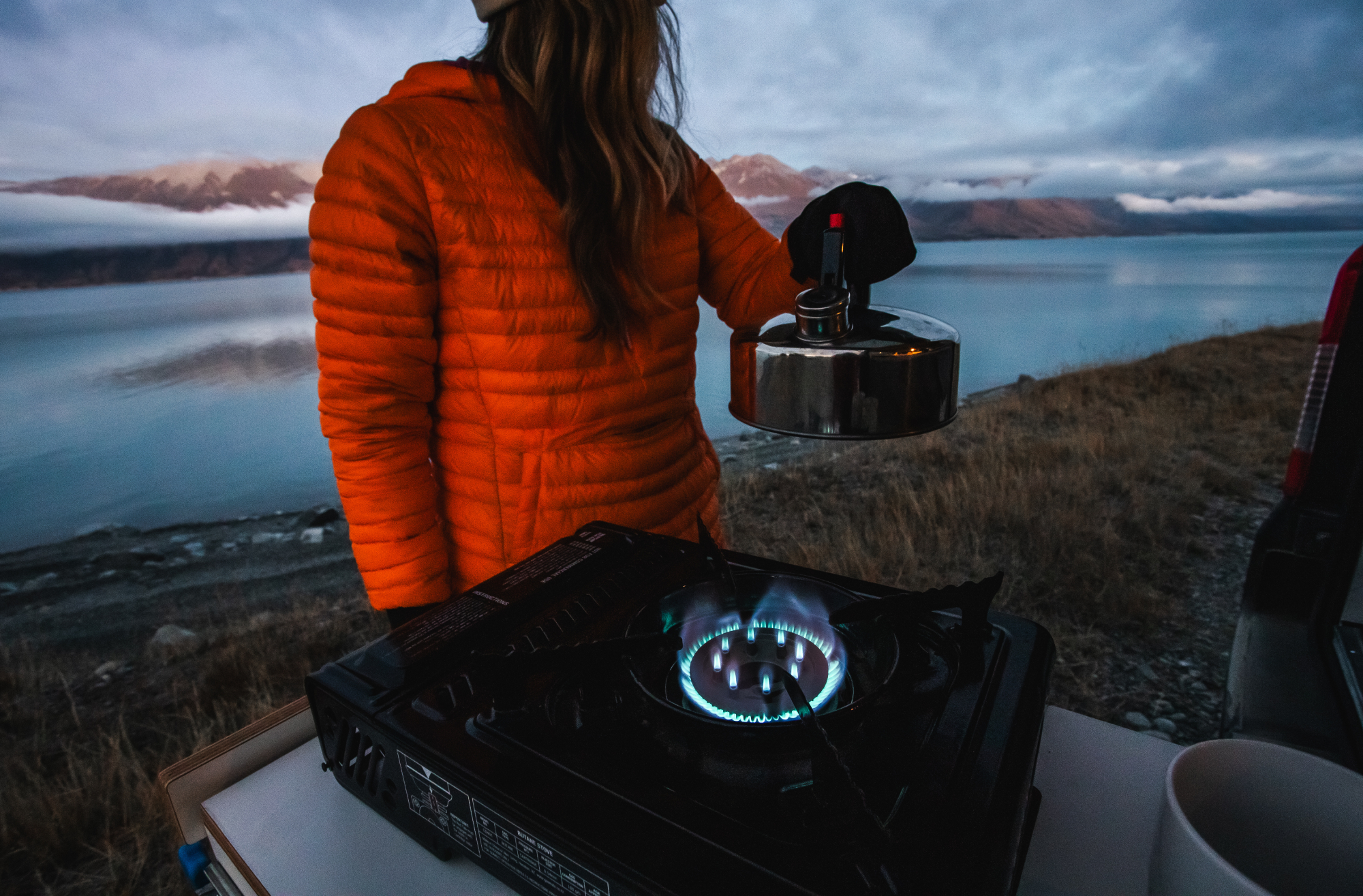
Campervanning Tips That Make a New Zealand Winter AwesomeA campervan handles a New Zealand winter well, as long as it is set up for it. A warm van and a sensible plan for the alpine roads are what make the cold season easy. These five tips cover the essentials: Pick a van built for the cold. At Big Little Campers, our Biggest One has a built-in diesel heater and an engine-heated hot shower. You can warm up and rinse off after a day in the snow. The Big One won't heat the cabin, but its standing-height interior kitchen means you can cook inside out of the cold. Our guide to choosing the right campervan breaks down which one suits your trip. Travel self-contained. All our vans are self-contained, carrying their own toilet, water, and waste storage. That lets you legally use the best free sites in winter just as in summer. Carry chains for the alpine passes. Most main routes stay open through winter. But several South Island passes can require you to carry snow chains when it snows: Arthur's Pass, the Lindis Pass, the Crown Range, and the Milford Road. Check the latest road conditions with NZTA before you cross the mountains. Drive to the winter light. Watch for black ice on shaded corners and bridges first thing in the morning, and plan to finish driving before the early dark. Use the quieter freedom camping. Spots are easier to get in winter, though some seasonal sites close, so check ahead. Our freedom camping in the South Island guide has the rules and the locations. |
Frequently Asked QuestionsWhat is the best time to visit New Zealand?It depends on what you want to do. Summer (December to February) is best for beaches and long days. Autumn (March to May) is for colour and quiet, and spring (September to November) is for green landscapes and high rivers. Winter (June to August) is for snow, skiing, and far fewer crowds. For a campervan trip with room to yourself, winter and the shoulder months are hard to beat. What are the winter months in New Zealand?The New Zealand winter months run from June to August, with July the coldest month. Snow falls mainly in the mountains, especially the Southern Alps and the central North Island volcanoes, while most towns and coastal areas stay above freezing. Can you drive a campervan in New Zealand in winter?Yes. Most main routes stay open through winter, and a well-set-up campervan handles the cold fine. The thing to plan for is the alpine roads. Some South Island passes require snow chains when it snows. Check NZTA road conditions, and pack chains if your route crosses the mountains. Is the South Island worth visiting in winter?Yes, the South Island is the standout for a winter trip. It has the country's best ski fields around Queenstown, Wānaka, and Mt Hutt. Lake Tekapo has some of the clearest night skies anywhere. And the snow-covered scenery is something you won't find up north. |
Plan Your Winter TripIf a winter road trip is on your mind, talk to the Big Little Campers team. We travel these roads in the cold ourselves. That means we can match the right van to your route and point you to the quiet park-ups. We will also sort the practical bits like heating and chains. Get in touch when you are ready to start planning. |
ReferencesTourism New Zealand. (n.d.). Seasons in New Zealand. https://www.newzealand.com/nz/seasons-in-new-zealand/ NIWA. (n.d.). Overview of New Zealand's climate. https://niwa.co.nz/climate-and-weather/overview-new-zealands-climate NZ Transport Agency Waka Kotahi. (n.d.). Winter driving. https://www.nzta.govt.nz/safety/driving-safely/driving-to-the-conditions/winter-driving |
|
Most people picture New Zealand in summer: long beach days, busy campsites, and often queues at the famous lookouts. But the seasons in New Zealand each open a different kind of road trip. The one travellers tend to skip might be the best of the lot. We have driven these roads in every kind of weather, and winter never ceases to surprise us. Fewer people, snow sitting low on the Southern Alps, and night skies you can actually see. |
Quick SummaryNew Zealand has four seasons. Because it sits in the Southern Hemisphere, they run opposite to the northern half of the world. Summer covers December to February, autumn March to May, winter June to August, and spring September to November. July is the coldest month, and January and February are the warmest. Still, every season is road-trip weather in its own way. Summer brings beaches and long daylight, autumn turns Central Otago gold, spring greens everything back up, and winter hands you snow-capped mountains and clear, quiet roads. For a campervan trip, winter is the season most people overlook and the one we keep coming back to. The South Island gets the bulk of the snow and the best of the ski fields, while the towns and main roads stay open and far less crowded. You will want a van set up for the cold (hot showers, cozy beds, and an easy-to-reach kettle) as well as a plan for alpine driving, but sort those two, and a New Zealand winter on four wheels is hard to beat. |
|
The Four Seasons in New ZealandNew Zealand runs on four three-month seasons, set by the Southern Hemisphere calendar. Summer falls between December and February, autumn between March and May, winter from June to August, and spring from September to November. July is the coldest month, and January and February are typically the warmest. Here is how the seasons in New Zealand travel.
Temperatures swing more by location than by date. In a typical winter, Auckland rarely drops below about 7°C. Christchurch sits around minus 2 to 11°C. Inland Queenstown runs from roughly minus 1°C overnight to 8°C by day, according to Tourism New Zealand. The far north stays mild year-round, while the deep south and the mountains do the heavy lifting on cold. |
|
|
What New Zealand's Climate Means on the RoadNew Zealand's climate runs from subtropical in the far north to cool temperate in the deep south, with proper alpine conditions in the mountains. Packed into a country you can drive end to end in a few days, that range makes the weather shift fast. The mountain ranges down the spine of the country split the wet West Coast from the drier East. You can go from the rainforest to the tussock in a couple of hours. According to NIWA, mean annual NZ temperatures sit near 10°C in the south and 16°C in the north. They drop about 0.7°C for every 100 metres you climb. That is why a sunny valley floor can turn to snow at the top of a pass. The practical takeaway: pack layers and a waterproof while keeping sunscreen handy in winter. |
Why Winter Is the Season Most Travellers UnderrateThe New Zealand winter season from June to August is the country's quietest stretch for travel. For a road trip, that is the appeal. You get snow in the Southern Alps and short queues at the big sights. You'll get a handful of outdoor activities you cannot do the rest of the year. The reason most travellers return to this place is the snow. The Southern Alps and the central North Island volcanoes turn white, and the ski fields open for winter sports. Off the slopes, the cold makes everything else better. Hot pools feel twice as good with frost on the ground, and the long, dark, clear nights are made for stargazing. Tourism New Zealand frames a Kiwi winter around ski resorts, alpine hikes, whale watching, hot pools, and the fascinating aurora. |
|
Winter in the South Island: Where to Drive Your VanWinter in the South Island of New Zealand is where the season earns its reputation. Most of the snow and the major skiing areas sit down south, within a few hours of each other.For travellers planning a winter route through the region, South Island campervan hire from Christchurch makes it easy to reach these alpine destinations with the right setup for colder conditions. Queenstown and WānakaQueenstown and Wānaka are the heart of South Island skiing and snowboarding. Coronet Peak and The Remarkables sit above Queenstown, with night skiing some evenings. Cardrona and Treble Cone look down on Wānaka. Cardrona is the country's largest skiable area. The season runs roughly mid-June into October, with the fields busiest over the July school holidays. After you have hit the slopes, there are plenty of things to do in Queenstown in winter. Much of it runs year-round: biking the Queenstown Trail, hiking the trails above town, wine tasting out in Gibbston Valley, and soaking at the Onsen hot pools. You may also fancy a cruise across Lake Wakatipu to Walter Peak on the century-old TSS Earnslaw steamship. Lake Tekapo and Aoraki/Mt CookLake Tekapo and Aoraki/Mt Cook are the South Island's winter showstoppers for big skies and big mountains. Tekapo sits inside one of the world's largest dark sky reserves. Winter's long, crisp nights make the stargazing about as good as it gets. The Tekapo hot pools are nearby to thaw out afterwards. Up the road at Aoraki/Mt Cook, clear, sunny days are the ones to walk the Hooker Valley Track. It is one of the best winter hikes in New Zealand's South Island. The country's highest peak waits at the end. Christchurch and CanterburyChristchurch is the most practical winter base in New Zealand, and an easy place to pick up a van. It sits on the east coast of the South Island. Mt Hutt is around 90 minutes from town near Methven. It is one of the South Island's most reliable ski fields for snow, and the closest big field to the city. North of town, the thermal pools at Hanmer Springs make a tidy winter weekend. From here, it is a straight shot south, and our Christchurch to Queenstown guide maps the stops if you want to build a New Zealand South Island winter road trip into one itinerary. For a longer loop, our South Island planning guide covers the rest. |
|
|
Campervanning Tips That Make a New Zealand Winter AwesomeA campervan handles a New Zealand winter well, as long as it is set up for it. A warm van and a sensible plan for the alpine roads are what make the cold season easy. These five tips cover the essentials: Pick a van built for the cold. At Big Little Campers, our Biggest One has a built-in diesel heater and an engine-heated hot shower. You can warm up and rinse off after a day in the snow. The Big One won't heat the cabin, but its standing-height interior kitchen means you can cook inside out of the cold. Our guide to choosing the right campervan breaks down which one suits your trip. Travel self-contained. All our vans are self-contained, carrying their own toilet, water, and waste storage. That lets you legally use the best free sites in winter just as in summer. Carry chains for the alpine passes. Most main routes stay open through winter. But several South Island passes can require you to carry snow chains when it snows: Arthur's Pass, the Lindis Pass, the Crown Range, and the Milford Road. Check the latest road conditions with NZTA before you cross the mountains. Drive to the winter light. Watch for black ice on shaded corners and bridges first thing in the morning, and plan to finish driving before the early dark. Use the quieter freedom camping. Spots are easier to get in winter, though some seasonal sites close, so check ahead. Our freedom camping in the South Island guide has the rules and the locations. |
Frequently Asked QuestionsWhat is the best time to visit New Zealand?It depends on what you want to do. Summer (December to February) is best for beaches and long days. Autumn (March to May) is for colour and quiet, and spring (September to November) is for green landscapes and high rivers. Winter (June to August) is for snow, skiing, and far fewer crowds. For a campervan trip with room to yourself, winter and the shoulder months are hard to beat. What are the winter months in New Zealand?The New Zealand winter months run from June to August, with July the coldest month. Snow falls mainly in the mountains, especially the Southern Alps and the central North Island volcanoes, while most towns and coastal areas stay above freezing. Can you drive a campervan in New Zealand in winter?Yes. Most main routes stay open through winter, and a well-set-up campervan handles the cold fine. The thing to plan for is the alpine roads. Some South Island passes require snow chains when it snows. Check NZTA road conditions, and pack chains if your route crosses the mountains. Is the South Island worth visiting in winter?Yes, the South Island is the standout for a winter trip. It has the country's best ski fields around Queenstown, Wānaka, and Mt Hutt. Lake Tekapo has some of the clearest night skies anywhere. And the snow-covered scenery is something you won't find up north. |
Plan Your Winter TripIf a winter road trip is on your mind, talk to the Big Little Campers team. We travel these roads in the cold ourselves. That means we can match the right van to your route and point you to the quiet park-ups. We will also sort the practical bits like heating and chains. Get in touch when you are ready to start planning. |
ReferencesTourism New Zealand. (n.d.). Seasons in New Zealand. https://www.newzealand.com/nz/seasons-in-new-zealand/ NIWA. (n.d.). Overview of New Zealand's climate. https://niwa.co.nz/climate-and-weather/overview-new-zealands-climate NZ Transport Agency Waka Kotahi. (n.d.). Winter driving. https://www.nzta.govt.nz/safety/driving-safely/driving-to-the-conditions/winter-driving |
Read more







.jpg)
.jpg)
.jpg)
.jpg)
.jpg)

.jpg)
.jpg)



.jpg)